From Tech Spaghetti to Scalable Growth: Lessons from Thorn's Marketing Transformation
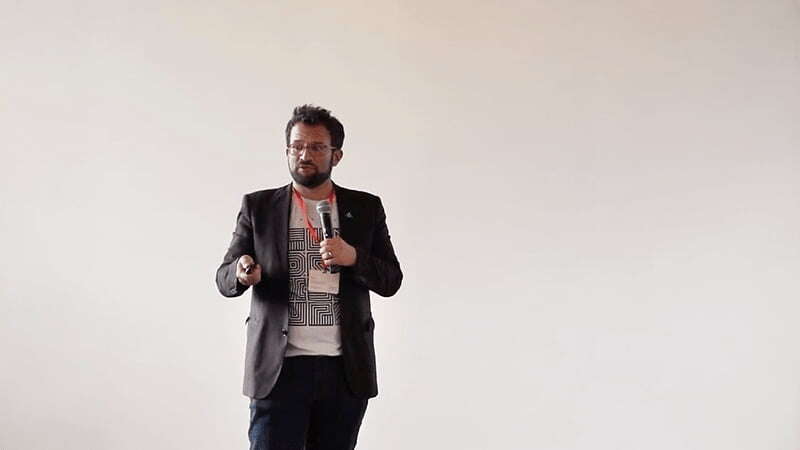
Conference presentation, delivered by Justice Hayatt, Marketing Director at Thorn
This session covers how Thorn's marketing function went from a single overwhelmed team member and a tangle of disconnected systems to a strategic, six-person team supporting two distinct revenue streams, and the six lessons learned along the way.
About Thorn
Thorn works to transform how children are protected from sexual abuse and exploitation online, through technology, original research, and collaborative partnerships. The organization exists because the internet has changed what it means to be a child, a parent, and a perpetrator; abusers increasingly use online platforms for grooming, sextortion, and the sharing of child sexual abuse material, and the scale of the problem has grown sharply in the digital era.
Thorn's core technology, Safer, equips tech platforms with tools to detect, review, and report child sexual abuse material at scale, and Thorn recently launched a classifier to help identify harmful conversations before they escalate. Thorn also provides consulting services to help tech companies understand their role in protecting children on their platforms, helps reduce the time it takes investigators to locate and remove child victims from harm, and conducts original research into youth online experiences to help equip the broader child protection community.
Background: How Marketing Became "Tech Spaghetti"
Justice joined Thorn in 2021, two years after the organization received a significant multi-year grant tied to the TED Audacious Project, which enabled Thorn to scale its technology and research significantly. The organization grew from roughly 30 to about 70 people in that window, but that growth was concentrated in engineering, research, and policy; the marketing team had shrunk down to one full-time writer and a part-time contractor whose contract was nearly finished.
Within a few months, several serious issues surfaced. The website ran on a coding language version so outdated that its WordPress theme could no longer be upgraded, creating real security vulnerabilities. There was no marketing process in place at all: no project management, no contact list hygiene, no regular website maintenance, and no structure for working with cross-functional teams. Nothing was being measured, and what limited reporting existed was unreliable, since the organization's three primary systems (HubSpot, Salesforce, and Fundraise Up) had integration issues that produced conflicting data.
Lesson 1: Understand the Problem
Fixing issues one at a time as they surfaced would have meant constantly uncovering new problems without ever getting ahead of them. Instead, Justice brought in CauseMic to conduct a full assessment of Thorn's tech stack and reporting methodology. The initial ask covered several things: an SEO analysis and keyword recommendations for both thorn.org and Thorn's parent resource site, recommendations for improving data integration between Salesforce, HubSpot, and Fundraise Up, guidance on getting more value out of HubSpot generally, and a measurement strategy to ensure proper tracking of website traffic and conversions.
That work started with building marketing user stories, a structured way of understanding exactly what functionality the organization actually needed across email automation, segmentation, cookie policy, data integrations, and reporting. A few real examples: the site needed to be GDPR-compliant for EU visitors without applying those same restrictions to US visitors; dynamic email segments needed to update based on both on-site and email behavior; email content needed to vary dynamically based on donor status, distinguishing recurring monthly donors from one-time donors; and major gift officers needed the ability to update a contact directly in Salesforce (flagging someone as a new major donor, for example) and have that change reflected across segments in close to real time.
Lesson 2: Prioritize
The resulting list of necessary fixes, roughly 20 major issues in total, was genuinely overwhelming. Two frameworks helped make it manageable.
- Impact versus effort. High-impact, low-effort projects are the clear first move. High-impact, high-effort projects are complex but worth prioritizing given their significance. Low-impact, low-effort projects are lower priority, worth tackling only once the higher-impact work is handled. Low-impact, high-effort projects generally aren't worth doing at all.
- Internal capacity versus capability. This helped determine what the team could reasonably take on directly versus where outside contractors were genuinely needed. Even when outsourcing due to a capability gap, it's worth staying closely involved throughout the process rather than fully handing a project off, with the goal of ultimately becoming the internal expert on your own systems rather than permanently dependent on an outside partner.
Using these two lenses, the team tackled data integrations and HubSpot functionality and cleanup first, since both sat squarely in the high-impact category. Website work followed, broken into smaller pieces: first cleaning up Google Tag Manager and event tracking, then addressing cookie policy (using an enterprise consent management tool, since Thorn needed different cookie policies across multiple web properties rather than one uniform policy), and finally website accessibility.
A full brand refresh, closely tied to the accessibility issue since Thorn's existing color palette itself wasn't accessible, was deliberately deprioritized for roughly a year and a half. The team wanted the rebrand to be an internal project but didn't yet have the bandwidth, so in the meantime, Thorn added a public accessibility statement acknowledging the issue and committing to fix it. Working through the bulk of these fixes took just over a year, ultimately reaching the point where the organization could accurately report on revenue, use behavior-based automation and personalization at scale, and genuinely measure marketing performance.
Lesson 3: Put the Right Support in Place
A few distinct roles proved essential. Administrators, potentially more than one if multiple platforms are in play; Thorn's Salesforce admin sits on the finance team, while its HubSpot admin sits on the operations team marketing reports into. A marketing power user, someone with both strategic and technical depth in your core platform; for Thorn, that was a colleague whose combined background made her an invaluable contributor to the broader effort. The full team matters too, whether someone is executing strategy directly inside HubSpot day to day, shaping visual identity, or driving thought leadership.
Finally, a genuine platform specialist who deeply understands both the technology and the organization itself is essential, not just a generalist agency. CauseMic filled that role for Thorn, and after nearly four years of partnership, functions as a true extension of the internal team. That level of specialization matters especially for a nonprofit as operationally complex as Thorn, and its absence early on is arguably what created the original mess in the first place.
Lesson 4: Futurecast, and Lean on Defaults
When Thorn first built its lead flow pipeline, the team focused exclusively on the donor journey without stepping back to consider what the organization would need two to three years out. That narrow focus meant the team hadn't anticipated needing a second, separate pipeline to support Safer, Thorn's B2B product, which ultimately led to real wasted effort and rework.
A related mistake: the team built custom HubSpot lifecycle stages to track the journey from subscriber to a specific donor segment, overriding HubSpot's standard lifecycle stages entirely. This felt sophisticated at the time, but it quietly broke HubSpot's built-in lifecycle stage reporting, and once one custom lifecycle stage journey was in place, it became impossible to run multiple pipelines within HubSpot at all. Thorn reverted to HubSpot's standard lifecycle stages the following year and now runs two fully integrated pipelines across HubSpot, Salesforce, and Fundraise Up.
Pipeline 1: Safer (B2B). This pipeline targets trust and safety professionals, the platform employees responsible for content moderation and user safety, generally the internal advocates pushing their own platforms to address online child sexual abuse. Leads generated through growth or content marketing (paid media or organic search) are nurtured until they reach a qualifying contact score, or automatically qualify by filling out a "contact sales" form. Once a lead qualifies, it syncs into Salesforce, where a seller evaluates genuine business need, budget, and decision-making authority before moving it into an opportunity and through the standard sales funnel (prospecting, discovery, proposal, negotiation, closed-won or closed-lost). This pipeline has been running for more than a year, with enough data now in place to benchmark and optimize each stage.
Pipeline 2: Major Donor Prospecting (experimental). This newer pipeline runs two parallel lead flows. The non-donor flow starts the same way as the Safer pipeline (growth or content marketing, webinars, content offers, remarketing) but uses contact scoring based on engagement with high-value content (an about page, an issue page, a "support us" page, webinar attendance, email interactions), donor-adjacent signals like living in a high-income postal code, and any existing donation history, to elevate strong major donor prospects. Once someone crosses a qualifying score, they're added to a major donor prospect segment, synced to Salesforce as a new lead, run through wealth screening, and reviewed by a major gift officer, who conducts additional research and decides whether to reach out directly.
The donor-activity flow starts differently, with an online donation in Fundraise Up, since that donor is already a HubSpot customer rather than a new lead. Every donation is wealth-screened, then evaluated in HubSpot against major gift criteria: either a qualifying wealth screening score combined with a gift within the last 18 months, meaningful donation activity (total giving of $11,000 or more, or a single gift of $500 or more), or, since wealth screening data isn't always reliable, a fallback combination of a high-income zip code and $1,000 or more in giving. The 18-month window is applied retroactively across Thorn's full donor history, not just new activity going forward, and the criteria deliberately look at total giving rather than single-gift size, since data analysis showed that many of Thorn's major donors originally started out giving less than $500 through the annual fund. Donors who qualify are automatically added to a major donor prospect list and a corresponding Salesforce campaign, which alerts a major gift officer. Outside this pipeline, standard annual fund marketing (one-time and monthly giving) continues to run based on audience segments and behavioral triggers rather than lifecycle stage.
Lesson 5: Do It Correctly From the Start, If You Can
This lesson may be obvious in hindsight, but it's worth stating directly: setting up a marketing automation platform and CRM with a genuinely holistic approach from day one, understanding strategy first and then how systems need to support marketing, pipeline reporting, and the overall customer experience, avoids most of what Thorn had to untangle later. A few specific recommendations:
- Look three to five years out. Will your organization need to support one marketing funnel, or, as Thorn eventually needed, two or three as the organization matures?
- Run a user story assessment to understand the roles, processes, and regulatory requirements your systems actually need to support, before jumping into system configuration.
- Map your lead flow starting with the donor or buyer journey itself, then build systems to support that journey, rather than starting with the systems and working backward.
- Avoid custom properties and lean on platform defaults wherever realistically possible.
- Protect data integrity. Map every data integration, understand exactly where each piece of data originates and when and how systems update it, watch for downstream effects when a property changes, and regularly audit syncing rules and inclusion lists.
- Plan for data cleanup with every major CRM change. A change isn't just about implementing new logic; it also requires a deliberate decision about whether and how to update existing records versus only applying the change going forward.
- Establish a clear source of truth for every metric. Decide explicitly which platform (Google Analytics, HubSpot, Fundraise Up, Salesforce) is authoritative for which specific metric or report.
- Document everything. This level of detail can't live in one person's head, and it shouldn't; Thorn uses Slab for internal documentation specifically so the rest of the team can understand not just what was done, but why.
- Maintain real governance over time. This remains an area of ongoing improvement even for Thorn's mature marketing function.
Lesson 6: Know When to Burn It Down
Not every problem is worth fixing incrementally. Thorn's HubSpot, Salesforce, and Fundraise Up issues, as overwhelming as they were, still represented necessary cleanup work regardless of which specific systems had been in place; that work didn't need to be scrapped and rebuilt from zero.
The brand and website were a different story. The visual identity was outdated and genuinely inaccessible, and the website's underlying code was obsolete. That combination called for a complete rebuild rather than incremental fixes, both to more effectively connect with prospective donors and to give the new brand a proper technical foundation. Thorn's brand refresh was conducted entirely in-house as a multi-year project spanning consumer research, identity development, messaging, and a new website and full set of brand assets.
Where Thorn Is Today
What began as a role focused on building a creative production team uncovered a genuinely broken marketing function, and nearly four years later, Thorn has a strong, refreshed brand and is recognized as a leader in the child safety space. The marketing team has grown from roughly one and a half people to six, and now supports two distinct revenue streams: a B2B stream driving adoption of Safer among trust and safety teams, and a donor-focused stream driving annual fund revenue and major gift leads. Safer's customer base has grown from 15 to more than 60 organizations, and Thorn is now in a position to run genuine experiments, including its still-developing major donor pipeline, rather than simply trying to keep existing systems running.
Audience Questions
How important is it for nonprofits to look to for-profit marketing and sales practices for inspiration?
Essential, particularly for an organization like Thorn that operates a genuine B2B product and needs to follow a real sales journey with for-profit tech companies. That said, the value isn't limited to organizations with a B2B product specifically; the major donor pipeline described above draws directly on for-profit sales and lead-nurturing tactics as well. One related lesson: don't let your organization speak two different internal languages about fundamentally similar journeys; treating the donor journey and the trust-and-safety journey as completely separate early on, when they actually needed to move through very similar systems, contributed directly to the original mess.
How were the marketing user stories actually developed and prioritized?
CauseMic led the process directly, interviewing not just the marketing team but everyone with a stake in the outcome, including the donor team and Thorn's Salesforce admin. That process produced a large combined list, and final prioritization decisions were made by ranking each item against Thorn's business and marketing objectives at the time.
Why keep Salesforce and Fundraise Up in addition to HubSpot rather than consolidating onto one platform?
HubSpot alone doesn't fully meet donation-capture needs, so a dedicated giving platform was still necessary. Salesforce was already in place, and based on experience at previous organizations, tearing out every existing system at once would have compounded the problem rather than solved it. Buy-in for further investment was also built gradually, by first delivering on what the organization had originally hired marketing to do, then demonstrating additional value from there; a healthy funding period at the time also made some of these early investments an easier conversation than they might otherwise have been.
What actually prompted the shift back from custom to standard HubSpot lifecycle stages?
The custom stages felt sophisticated at first, but once the team needed to report standard pipeline metrics for Safer (MQLs, SQLs, pipeline stage data), those questions were impossible to answer, and building the needed lead flow wasn't possible under the custom structure. Resetting meant starting over with the buyer journey itself and mapping that journey cleanly across both HubSpot and Salesforce. Reconciling terminology between the two systems was its own challenge (a Salesforce "lead," for example, corresponds to a HubSpot "MQL"), and early internal reporting that used HubSpot-specific terms like "MQL" didn't land with a sales team that thought entirely in Salesforce terms, a reminder that shared language across systems matters as much as the systems themselves.
Why keep the Thorn and Safer brands and websites separate instead of combining them?
The two audiences require fundamentally different messaging. Donors respond to mission-driven language about preventing revictimization and finding victims; trust and safety professionals are primarily motivated by risk mitigation and compliance, even though the underlying mission still matters to them. Keeping the funnels, messaging, and retargeting completely separate allows each to be finely tuned to its actual audience, while Thorn's other audiences continue to be served under the main Thorn brand.
Closing
Thorn's transformation, from a single overwhelmed hire inheriting a tangle of disconnected systems to a six-person team running two distinct, data-driven pipelines, didn't happen through a single fix. It took an honest assessment of the full scope of the problem, disciplined prioritization, the right specialized support, a longer-term view of where the organization was headed, and, in the case of the brand and website, the willingness to rebuild rather than patch. None of it would have been possible without first untangling the underlying "tech spaghetti."
This transcript has been lightly edited using AI for clarity and readability, with filler language and audience Q&A introductions removed.

 Watch now about Digital Innovation for Nonprofits: Using HubSpot to Drive Global Impact
 Watch now about Understanding Attribution: Unlock Your Marketing Insights with HubSpot Revenue Attribution
 Watch now about Making Moments Matter: How Nonprofits can Harness the Power of Earned Media
 Watch now about Granting Capacity, Time, and Impact: Building Your Business Case for a CRM Transformation
 Watch now about Paving the Path to Give: Reducing Donation Form Friction with Fundraise Up
 Watch now about Making Moments Matter: How Nonprofits can Harness the Power of Earned Media