
Marketing dollars stay in a company's marketing budget. They're spent on advertising that happens to include your nonprofit's brand, not handed over for you to use freely like a grant or donation. That distinction matters because marketing budgets are typically much larger than philanthropic ones, and they're usually controlled by a completely different team.
U.S. ad spend was projected to hit $419 billion in 2024, about 17 times the size of total corporate giving. Almost none of it reached nonprofit advertisers. In this session, Erin Cavender-Sharma, Deputy Director of Growth Marketing Services at CauseMic, walks through how you can tap those marketing dollars using corporate partnerships. You’ll learn how to identify and vet the right corporate marketing partner for your nonprofit using a real scoring exercise, then learn how to build a pitch that partners want to get behind.
Meet the Speaker
-

Erin Cavender-Sharma
Deputy Director of Growth Marketing Services, CauseMic
Erin leads CauseMic’s Growth Marketing Services, and has made a career of building marketing strategies for Fortune 500 companies and nonprofits alike. Her approach blends data insights with impact storytelling to connect with supporters at every stage of the donor funnel.
Chapters
Transcript
How to Use Corporate Partnerships to Grow Your Nonprofit's Brand Awareness
Webinar transcript, presented by Erin Cavender-Sharma, Deputy Director of Growth Marketing Services at CauseMic
This session covers what corporate marketing dollars are (and aren't), how to find and vet the right corporate marketing partner for your organization, how to position your nonprofit as a strategic partner, and what a successful co-branded awareness campaign actually looks like.
What Are Corporate Marketing Dollars, and What Aren't They?
Corporate marketing dollars are funds sitting in a for-profit company's marketing budget that a nonprofit can tap into by forming a strategic marketing partnership and launching a co-branded campaign, one where the advertising features both the nonprofit's brand and the for-profit partner's brand together.
Corporate marketing dollars are not philanthropic donations or grants. While both can come from for-profit companies, marketing dollars never actually leave the partner's marketing budget to be handed over for the nonprofit to spend freely; they're dollars the partner spends directly on advertising that happens to include your brand. The source matters too: philanthropic donations and grants usually draw from a relatively small, isolated budget managed by a PR team, while marketing budgets can be enormous and are typically managed by a dedicated marketing department, team, or agency.
The scale difference is significant. U.S. ad spend is projected to reach $419 billion this year, compared to a projected $21 to $25 billion in corporate donations, meaning ad spend is roughly 17 times the size of corporate giving. Ad spend is expected to keep growing, reaching an estimated $513 billion by 2028. (Note: verify these figures and their source before publishing.) Very little of that spend currently goes to nonprofit advertisers: fewer than 100 U.S. nonprofits spend more than a million dollars a year on advertising, and most of them are organizations most people would immediately recognize, like the Red Cross or Make-A-Wish. Most nonprofits don't have that kind of budget, but that doesn't rule out making a real impact in paid advertising, especially by partnering with the right for-profit advertiser and tapping into their existing marketing budget.
Why For-Profit Companies Consider Co-Branding
A few shifts in the advertising landscape have made brands more open to this kind of partnership:
- Digital ad formats now dominate U.S. ad spend, pulling share away from TV, radio, and print, which has created a flood of new platforms and formats crowding the marketplace.
- Cross-screen viewership is increasing across all age groups, meaning a single viewer's attention is often split across multiple screens and platforms at once, making any individual ad less effective.
- Attention spans have shrunk significantly. Nielsen research has found advertising attention spans of roughly 1.3 to 1.7 seconds depending on age group, less than half the attention span of a goldfish, pushing advertisers to prioritize breaking through clutter and capturing genuine attention over any other metric.
- Advertisers have shifted from promoting products and features to promoting brand identity and shared values, because product-and-feature messaging has stopped resonating on its own. Consumers increasingly choose brands that align with their personal values (Patagonia's prominent messaging around climate action is a common example of this in practice), which creates a real opening for nonprofits: when a for-profit brand associates with a nonprofit doing real, values-aligned work, it signals authenticity to that brand's own audience.
The strongest corporate partnerships happen when there's clear three-way alignment between the nonprofit's mission, the for-profit partner's stated brand values, and the values of that partner's own consumers. When all three line up, credibility increases for both organizations.
Example: Team Rubicon and Carhartt
Team Rubicon, a nonprofit that mobilizes military veterans and first responders (known internally as "Greyshirts") to respond to disasters, partnered with Carhartt to test the durability of a new sweat-resistant t-shirt under real field conditions. Team Rubicon received free product and meaningful exposure to Carhartt's audience (reportedly tens of thousands of engaged subscribers who represent potential future volunteers, advocates, or donors), while Carhartt got to demonstrate both product durability and a genuine commitment to a cause. It's a clear example of a low-cost, high-alignment partnership that benefited both sides.
Finding the Right Corporate Marketing Partner
Step 1: Revisit Your Value Proposition
A value proposition answers why someone should donate to you right now instead of elsewhere, or instead of not donating at all, and it has four components: appeal (how badly does a donor want this problem solved), exclusivity (what makes your approach different from other options), credibility (how believable is it that you can solve the problem), and clarity (how easily can someone understand your approach). Clarity is often the piece organizations skip, but it matters, since audiences today are broadly skeptical, including of nonprofits.
Team Rubicon's value proposition (serving the community by mobilizing veterans to continue their service, leveraging their skills to help people prepare for, respond to, and recover from disasters) is appealing and credible, and clearly explains how they accomplish their mission. It doesn't include an explicit exclusivity statement, but their advertising implies it more subtly by consistently positioning themselves as the team that shows up after a disaster hits.
Step 2: Understand Your Audience
Start with two basic dimensions: demographics (age, gender, race, ethnicity, and other baseline identifiers) and psychographics (personality, lifestyle, and values, or what genuinely keeps your audience up at night). You may not have hard data for every question, but you can make informed assumptions from donor interactions or any interest data already in your CRM.
Organizing this information into donor personas, hypothetical people who represent your actual audience, makes it easier to test whether a specific message or partnership would resonate. Team Rubicon, for example, uses personas like "Kevin the Empowerer" and "Kathy the Compassionate Reporter," each with distinct demographic and psychographic profiles, to ask directly: would this resonate with Kevin? Would Kathy care about this?
Step 3: Build Your List of Potential Partners
Use both your audience and your mission to generate candidates. From the audience side, ask what brands your donor personas already engage with, what brands align with their personal values, and what brands project an image they'd find desirable. From the mission side, ask what brands you already regularly engage with in your work, and what brands directly benefit from the outcomes you create.
Step 4: Score Your Options With a Compatibility Exercise
For each prospective partner, score four questions on a 1 to 5 scale:
- Would this partnership make you more appealing to your target audience?
- Is this partner currently working with other nonprofits? (Score this one as a neutral 3 if you're unsure.)
- How believable is it that this partner genuinely cares about your mission?
- How easily will your audience understand why you're partnering with this company?
Multiply each score by a weight reflecting how important that factor is to you (for example, appeal might be weighted at 35% and exclusivity at 15%; weights should total 100 and can be adjusted to reflect your own priorities), then sum the weighted scores for a total compatibility score between 100 and 500.
- 100 to 300: Low compatibility. This partner likely isn't the strongest fit.
- 300 to 400: Moderate compatibility. Worth a closer look at specific factors before investing heavily.
- 400 to 500: Strong alignment. These are the partnerships to prioritize, especially with limited time and resources.
Positioning Your Nonprofit as a Strategic Partner
Partners will generally be evaluating you against the same criteria you've just used to evaluate them: is this partnership appealing, exclusive, credible, and easy for their audience to understand? It also helps to remember what you're actually selling: a story, not a product, specifically the story of having made a difference in a cause your partner's audience cares about.
Build Your Story and Content Library
Invest in a strong library of impact stories, images, and video from the field, all laddering up beneath your value proposition. Asset quality matters, since it signals to a prospective partner whether you're established enough to help advance their brand. Content collection should be ongoing rather than a one-time effort, since recent stories carry more weight than older ones; a content calendar can help you plan collection intentionally throughout the year, including around specific content trips. Capture content in formats suited to where it will actually appear (vertical or square formats for social, for example), and invest in video specifically where you can, since it's especially effective at capturing attention and evoking emotion.
Build the Strategic Case
Position your organization as the answer to a real problem the partner faces: how would this partnership help them break through advertising clutter, or highlight specific product features? Demonstrate audience overlap where you can. Without access to formal market research tools, you can often infer a prospective partner's target audience just by observing their existing advertising, then research broader marketing trends for that demographic (free resources like Nielsen's annual marketing trend report are a good starting point).
When you build your ask, be specific and creative. Team Rubicon's ask to Carhartt was for product, not cash, and asks that don't start with money, but instead show your staff or volunteers genuinely interacting with a partner's product, often build more credibility anyway (money can still come later). It's also worth outlining a good/better/best set of options so a partner can scale the partnership to their needs, loosely mapping what a final deliverable (a video, a press release, or something else) might look like and what each side would contribute, and being deliberate about making the partnership as turnkey and low-risk as possible for your partner. Minimizing the effort and resource investment required on their end, and being clear about what they stand to lose if the partnership underperforms, makes it much easier for a partner to say yes.
Build Your Pitch Deck and Reach Out
Once your strategy and content are in place, build a pitch deck and brand guidelines. A useful approach is building a generic base version first that can be adapted for multiple prospective partners rather than starting from scratch each time. Outreach can happen through marketing team members on platforms like LinkedIn, particularly effective for smaller companies, but don't limit your list to smaller partnerships alone; mixing several attainable brands with a couple of aspirational ones is a reasonable approach. Two often-overlooked outreach channels: connecting directly with ad agencies, who can shop a partnership idea around to their own client roster, and attending for-profit industry events and trade shows relevant to a prospective partner's category, where you can network and share your pitch deck directly.
What a Successful Co-Branded Campaign Looks Like
Look, tone, and feel (LTF) alignment. A strong co-branded campaign should feel like it could belong to either brand: similar colors and styles, a tone that sounds natural coming from both organizations. One useful gut check: do the two brands' respective imagery and messaging feel like they belong in the same universe, and would their "characters" plausibly spend time together? Team Rubicon and Carhartt pass this test easily, both using a blunt, gritty tone and visual style; a serious, injustice-focused nonprofit paired with an intentionally lighthearted consumer brand would likely fail it.
A multi-channel approach. Great co-branded campaigns reach the right audience across multiple channels rather than relying on just one, and it's reasonable to lean on your partner's advertising expertise here, since they often have a dedicated team or agency for exactly this. The audience should be people who both care about your cause and are likely to purchase your partner's product, reached in channels where they can act easily (QR codes on broadcast or connected TV, dedicated landing pages for digital and social).
The right moment to engage. These campaigns are built to drive brand awareness, not necessarily donations directly, so it's fine if the immediate action a viewer takes is a product purchase rather than a gift. Still, include easy entry points for viewers to learn more about your organization, since that's what ultimately helps convert brand awareness into future donors.
Ongoing partnership maintenance. A few practices help sustain a partnership beyond a single campaign: planning content together in advance (sharing market research, agreeing on roles and creative usage rights, timing messaging to work for both organizations' calendars), aligning on how success will be measured before launch so both sides are working toward the same KPIs, and keeping communication channels genuinely open. It's generally easier to deepen and extend an existing partnership over time than to continually source new ones.
Frequently Asked Questions
Do you have partnership ideas for a specific type of organization, like an emergency shelter?
Start by looking at the for-profit brands you already interact with regularly, distributors, suppliers, or vendors you rely on for day-to-day operations. Those existing relationships are often a natural starting point, and you can run them through the same value-proposition alignment exercise described above to see how strong a fit they'd actually be.
Does this strategy only work with large national brands, or can smaller, local businesses work too?
It works well with smaller and local businesses too, and in some cases smaller companies are more receptive, since they're often working just as hard to establish their own market credibility and may see real value in a partnership that helps with that. Working with multiple smaller partners simultaneously, each contributing something different, is also a completely reasonable approach.
What if your organization is brand new or very small? Where should you start?
Start by building your story and content library first. Being early-stage actually gives you the advantage of building that foundation with corporate partnerships in mind from the beginning. Sponsorship of an in-person event is a strong early entry point, since it lets you approach a local business as a marketing partner rather than as a charity ask. If your organization has volunteer opportunities, inviting corporate partners to bring employees for a hands-on engagement, and investing in genuinely high-quality photos, a short press release, and usable video footage from that day, gives you real assets to offer, rather than relying on donations alone.
Closing
Corporate marketing partnerships open up a source of funding most nonprofits never fully tap: a partner's marketing budget, not their philanthropic one, which is often dramatically larger. The strongest partnerships come from real alignment between your mission, a partner's brand values, and that partner's own audience, backed by a genuinely compelling story and a pitch that makes saying yes as easy as possible.
This transcript has been lightly edited using AI for clarity and readability, with filler language, audience banter, and live scheduling logistics removed. Direct dialogue from the referenced Team Rubicon/Carhartt advertisement was paraphrased rather than reproduced.
-
 Watch now about How to Run a Retrospective
How to Run a Retrospective
A simple way to improve how your team runs campaigns? The retrospectives. Matt Scott, cofounder and CEO of CauseMic, walks through the six-step process that gives your team the tools they need to figure out what worked, what didn’t, and what to do ...
-
 Watch now about How to Use CauseMic’s Problem-Solving Framework
How to Use CauseMic’s Problem-Solving Framework
Trade run-of-the-mill brainstorming meetings for a process that gets you more ideas, clearer decisions, and actionable next steps. Matt Scott and Bobbi Snethen walk through CauseMic’s framework for turning any team problem into a clear, prioritized ...
-
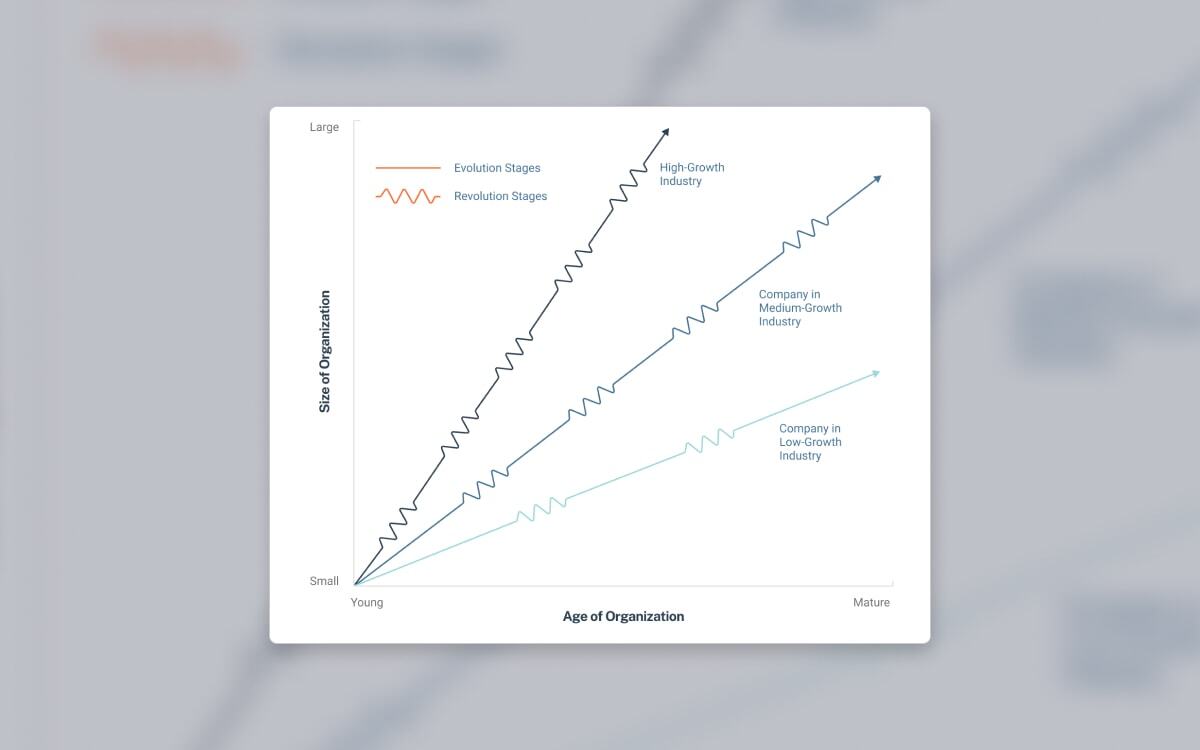 Read the article about Phases of Growth and Crisis in the Life of Nonprofits
Phases of Growth and Crisis in the Life of Nonprofits
Every nonprofit experiences growing pains. Ironically, most of them are caused by the same decisions that made growth possible. This article breaks down the five phases of nonprofit growth, the crisis that ends each one, and how to figure out which phase ...
-
 Watch the webinar about Anatomy of a Highly Effective Year-End Fundraising Plan
Anatomy of a Highly Effective Year-End Fundraising Plan
This practical, channel-by-channel playbook shows you how to learn from past performance, build an omnichannel strategy around your goals, and create content that cuts through the year-end noise.
-
 Watch the webinar about How to Secure a Capacity Grant to Pay for Your Nonprofit's Digital Transformation
How to Secure a Capacity Grant to Pay for Your Nonprofit's Digital Transformation
Most funders will gladly pay for your next program. The technology that lets you scale it? That's a tougher ask. This session breaks down what a capacity grant is, who's likely to fund one, and how to build a funder pitch that gets results.
-
 Watch the webinar about How to Quickly Define an Actionable Nonprofit Strategic Plan for Real Growth
How to Quickly Define an Actionable Nonprofit Strategic Plan for Real Growth
One of our clients spent more than two years creating a strategic plan that no one actually followed. In this session, we'll show you how to build an actionable strategic plan in three weeks, using the same framework that helped grow Team Rubicon's ...