
There’s no one-size-fits-all channel mix, but four tend to do the heavy lifting: email, direct mail, paid social, and your campaign landing page. Each plays a different role in the donor's journey, so success looks different for each. This webinar shows you what each channel does best and how to get them working together instead of competing for attention.
Year-end is fundraising’s busiest season, with every channel running at once and donors getting appeals from what feels like every nonprofit on the planet. Erin Cavender-Sharma, Deputy Director of Growth Marketing at CauseMic, walks through what a genuinely effective year-end plan looks like, including how to evaluate past performance across email, direct mail, paid social, and campaign landing pages. You’ll learn how to sequence the right message across the right channels and create content that holds up from the first email to the final ask.
Meet the Speaker
-

Erin Cavender-Sharma
Deputy Director of Growth Marketing Services, CauseMic
Erin leads CauseMic’s Growth Marketing Services, and has made a career of building marketing strategies for Fortune 500 companies and nonprofits alike. Her approach blends data insights with impact storytelling to connect with supporters at every stage of the donor funnel.
Chapters
Transcript
Anatomy of a Highly Effective Year-End Fundraising Plan
Webinar transcript, presented by Erin Cavender-Sharma, Deputy Director of Growth Marketing Services at CauseMic
This session breaks year-end fundraising planning into three parts: evaluating past campaign performance, building an actionable omnichannel strategy, and creating content that breaks through the advertising clutter.
Part 1: Evaluating Past Campaign Performance
The first step in building a highly effective year-end plan is looking backward. Evaluating what worked and what didn't in past campaigns keeps you from wasting time and money by repeating mistakes or missing opportunities.
We recommend evaluating past performance two ways: by revenue overall, and by channel, since not every fundraising channel does everything well. Each channel has strengths and weaknesses, similar to a team, with the shared goal of carrying donors toward the point of donation.
There are many channels you could activate for year-end, but this session focuses on the four with the heaviest impact: email, direct mail, paid social, and the campaign landing page.
One channel that's notably absent is organic social. For most organizations, it's a low driver of both revenue and engagement: the average Meta post reaches only about 45% of an organization's follower audience, and typically less than 1% of followers engage with a given post on a platform like Facebook. If your team is trying to close a capacity or funding gap heading into year-end, organic social may not be the best place to invest your time and resources. That said, review your own organization's organic social performance before ruling it out.
Email is the backbone of most year-end fundraising strategies. Its strength comes from reaching audiences directly in their inboxes at little to no cost, with content that can be tailored to the audience's specific needs: subject matter, appeal size, and more, largely built into most email platforms already.
Email isn't a silver bullet, though. It requires an email address, so it's poorly suited to reaching new donors or subscribers, and even reaching existing donors is getting harder. According to NextAfter, the most successful fundraisers send somewhere between 12 and 15 emails during the November–December year-end window, but only about 26% of those emails get opened. Per 2024 M+R Benchmarks data, nonprofits increased email volume by about 12% year over year while average response rates dropped by roughly 16%. Organizations are sending more email and getting less engagement from it, which is exactly why digging into past performance to find opportunities matters.
Core email KPIs:
- Open rate: how compelling the subject line and preview text were
- Click-through rate: how compelling the email content was at driving further action
- Conversion rate: how compelling the full journey was, from email through landing page to donation page (i.e., how well each step built "cognitive momentum" toward the donation)
- Revenue: how valuable email is as a channel overall
- Unsubscribe rate: whether cadence or content mismatched audience expectations
If a KPI is lagging, consider testing:
- Low open rate: a different sender (a board member, a beneficiary) or a different content focus
- Low click-through rate: more engaging storytelling formats (photos, video) or a different blend of logical vs. emotional appeals ("head" vs. "heart")
- High click-through, low conversion: a mismatch between the email CTA and what the landing/donation page actually asks for
- High conversion, low revenue: the ask may be too small. Test larger gift asks, backed by stronger impact statements, or segment for larger asks among donors more likely to give
- High unsubscribe rate: review cadence (are you sending too often?) and content mix (too much asking, not enough cultivation?)
Don't try to fix everything at once. Doing too much simultaneously can damage your email approach. Pick one or two opportunities to test each year based on historical performance.
Paid Social
Paid social (primarily Meta and Instagram) is a strong channel for reaching large audiences outside your existing ecosystem and bringing in new donors or leads, especially with strong video or photo storytelling. Where it struggles is return on ad spend (ROAS): 2024 M+R Benchmarks found Meta and TikTok ROAS dropped below 50 cents, meaning for every dollar spent on ads, organizations can expect to earn back roughly half in revenue. ROAS is likely to get even lower during the back half of the year as nonprofit and for-profit organizations compete for the same ad inventory over the holidays.
If you're activating paid social for the first time this year, proceed with caution, and don't measure it primarily on short-term ROAS. Think of it instead as the start of a longer-term relationship: a channel for acquiring new donors and leads you can then cultivate through other channels like email.
Core paid social KPIs:
- Reach and frequency: the percentage of your audience reached and how many times each person saw the ad. As a baseline, aim for at least 65% reach at 3x frequency to achieve "creative breakthrough."
- Click-through rate: how compelling the ad content was at driving further action
- Conversion rate: how compelling the full journey (ad to landing page to donation page) was
- New donors: whether the ad successfully brought in new donors or leads for future cultivation in other channels
If a KPI is lagging, consider testing:
- Low reach/frequency: revisit targeting (too loose dilutes reach and frequency; too tight drives up cost) and rebalance budget across audiences. Meta's auto-optimization tools can help.
- Low click-through rate: reconsider content focus, format, or length. Average attention span for advertising runs 1.3 to 1.7 seconds depending on age group, so content needs to grab attention immediately.
- High click-through, low conversion: check alignment between ad, landing page, and donation ask. Social audiences may be newer to your organization and not ready for a large gift.
- Low new-donor acquisition: try interest-based targeting, retargeting site or social visitors, or expanding lookalike audiences, and adjust budget allocation across those groups.
As with email, pick one or two levers to test rather than everything at once.
Direct Mail
Direct mail has a reputation as a boring, declining channel, but it doesn't have to be. It skews toward higher response rates with older donors, but its real strength is that it's tactile, something digital channels can't replicate. A remarkable, personalized piece (even something as simple as a birthday card) can leave a much bigger impression than a digital touch.
That said, execution is one of direct mail's biggest challenges: it requires significant lead time, investment, and a physical mailing address, which is why most organizations reserve it for mid-level and major donors. Even with good execution, direct mail that doesn't break through the clutter is an uphill climb. On average, for every dollar raised online, direct mail raises only about 94 cents. (Note: verify this figure against source data before publishing. Numbers like this are easy to mis-hear in a live recording.)
Core direct mail KPIs:
- Response rate: how many people took an additional measurable action
- Conversion rate: how many people ultimately donated (a joint effort between the mailer, the landing page, and the donation page)
- Average gift size: whether the ask matched the giving potential of a mailing list audience
- ROAS: whether the campaign was profitable after mailing and production costs
If a KPI is lagging, consider testing:
- Low response rate: different authors (beneficiaries, board members) or different content focus, length, or format. Remarkable results require sending something remarkable.
- Low conversion rate: revisit alignment across the donor journey (mailer to landing page to donation page), or test different giving levels if the ask may be miscalibrated
- Low average gift size: confirm you're reaching the right audience and pairing larger asks with strong supporting impact statements
- Low ROAS: before abandoning the channel, revisit how the audience is defined: capacity to give, and cost to reach them (local vs. distant), to refine the list toward the best prospects
Direct mail is one of the more expensive channels, so as with the others, prioritize one or two improvements per campaign rather than everything at once.
Campaign Landing Pages
The campaign landing page is where all traffic, whether from email, direct mail, or paid social, should ultimately drive. It should be distinct from your website homepage. Where a homepage functions like a digital billboard (mission, basic organizational info), a campaign landing page is built for deep storytelling: video, photos, statistics, and urgency-driving elements like countdown clocks and progress bars.
Landing page performance is hard to isolate because of attribution: how much of the result is due to the traffic source versus the landing page itself. Regardless of whether you use last-touch or multi-touch attribution, it's important to recognize that both the traffic source and the donation page experience influence what you see at the landing page level.
Core landing page KPIs: click-through rate (to the donation page), conversion rate, and revenue, with the caveat that all three are influenced by what happens before and after the landing page.
If click-through rate is low, consider testing:
- Different storytelling formats (video, photos) for emotional impact
- Live urgency elements (countdown clocks, progress bars)
- Different impact statements tied to what a donation would specifically achieve
As with the other channels, test one or two changes per campaign rather than everything at once.
Part 2: Building an Omnichannel Year-End Strategy
An omnichannel fundraising strategy designs messaging and channel timing ("flighting") to build on each other and create synergy: a campaign that feels bigger than the sum of its parts. Much like seeing a billboard and hearing a radio ad for the same company can make it feel like that company is "everywhere," a well-flighted year-end campaign can create the same impression using a relatively small number of channels.
Step 1: Set a Goal
Goals should be set based on both attainability and impact.
For attainability, consider:
- Revenue raised through similar past campaigns
- Whether budget or team capacity has changed
- External factors (elections, broader economic conditions) that could affect giving
- Whether the goal should be adjusted for inflation
For impact, translate the dollar goal into a mission outcome (e.g., "$X raised = Y people served"). This strengthens your messaging and should still ladder up to any broader annual organizational goals.
Step 2: Decide on Giving Tuesday vs. Year-End
Despite its prominence within the nonprofit sector, Giving Tuesday is a relatively minor event for most individuals outside the industry. Only around 4% of year-end revenue is typically given on Giving Tuesday itself. Research from NextAfter, based on an analysis of thousands of nonprofits, found that about half of year-end revenue comes in after Christmas, with roughly 20% arriving on the last day of the year.
This doesn't mean Giving Tuesday should be ignored. Some organizations, including some CauseMic partners, have seen strong results from it. The recommended approach is to treat Giving Tuesday and true year-end as two smaller pulses within one larger campaign, rather than choosing one over the other.
Step 3: Identify Your Levers
Year-end revenue is driven by three variables: traffic, conversion rate, and gift size. Depending on where your organization already performs well, you can choose which lever(s) to prioritize. For example, an organization with an already-strong conversion rate might prioritize traffic and gift size instead.
Step 4: Choose the Right Channels
Most channels discussed above (email, direct mail, paid social) are primarily traffic drivers. Channels and tactics aimed at conversion include on-site elements like sticky bars, homepage hero images, or campaign pop-ups, as well as the campaign landing page and donation page themselves.
The landing and donation pages are baseline requirements for any year-end campaign regardless of which lever you're prioritizing; they primarily affect conversion rate and gift size rather than traffic.
Step 5: Check Technical Feasibility
Before committing to a channel, ask:
- Does our audience actually use this channel consistently?
- Do we have the contact information needed to reach them there (especially relevant for email and direct mail)?
- Is our paid channel budget large enough to achieve creative breakthrough (roughly 65% reach at 3x frequency)?
- Is our audience's size and giving potential large enough to justify the cost (especially relevant for direct mail and paid social)?
- Are we actually set up to measure this channel's performance?
Paid social budget needs vary by organization. Factors include existing brand awareness, social presence, other channels being activated, and available first-party data for building lookalike audiences. As a general guideline, CauseMic typically doesn't recommend paid social campaign budgets below roughly $15,000, though this varies case by case.
Step 6: Check Content Feasibility
Ask:
- Do we have enough quality content to run in each channel? If not, it may be better to run fewer channels with stronger, unique content.
- If content is lacking, can we realistically produce it before the campaign launches?
- Does content across channels build a cohesive story (the "cognitive momentum" from traffic source to landing page to donation page)?
- Is content built specifically for the channel it will appear in?
- Does content align with what's already known about the audience: interests, giving potential, channel habits?
- What would new content cost to produce? If a costly shoot or collection effort is required, that channel may be better suited to a future year rather than this one.
Step 7: Align on Measurement
Four measurement considerations:
- Measure KPIs that reflect each channel's strengths. Don't judge a campaign landing page primarily on traffic, or paid social primarily on ROAS.
- Decide in advance what questions you want answered at the end of the campaign (e.g., donor geography), and make sure your setup can actually capture that data.
- Determine a single measurement source of truth. Google Analytics, ad platform reporting, and your CRM can all report different numbers due to differing attribution models.
- Periodically cross-check those different sources anyway. Significant discrepancies can flag a tracking or setup issue worth catching early in the campaign.
Case Study: Dig Deep
Dig Deep provides access to clean, running water for underserved communities across the U.S. In 2023, they set two goals: raise $1.5 million in overall fundraising revenue by January 1, and raise $960,000 on Giving Tuesday specifically, together enough to provide water access to roughly 250 families.
Knowing from past performance that Giving Tuesday would be a major priority, Dig Deep still supported both Giving Tuesday and the full year-end window. They identified opportunities across all three revenue levers, selected channels suited to driving traffic, and invested in strong campaign landing and donation pages to lift baseline conversion rates and gift amounts. CauseMic worked with them to confirm technical feasibility and content alignment, and the team aligned on their CRM as the measurement source of truth.
The result: a record year-end campaign that raised over $1.6 million and served more than 270 families, exceeding their original goal.
Part 3: Content That Breaks Through the Clutter
Strategy and content should be built in tandem. Content should inform the strategy, and the strategy should guide what content says to which audience. Four content planning principles apply:
Principle 1: Plan Messaging by Channel
Messages should build on each other across channels rather than repeat the same information. An email, for example, shouldn't restate everything on the landing page; it should tease just enough to drive the click-through.
A content planner (a high-level view of what messages run in which channels and audiences, across the campaign timeline) helps ensure no channel runs off-message and lets you plan message sequencing (e.g., Giving Tuesday messaging across email, direct mail, and organic social in the weeks leading up to it, shifting to year-end messaging afterward).
A communications calendar goes further, detailing every individual communication: deployment date, day of week, time, channel, audience, author, key messaging points, and CTAs. Beyond directing content and activation teams, it helps catch scheduling gaps, over- or under-messaging of specific audiences, and repetitive senders or CTAs across the campaign.
Principle 2: Increase Cultivation as You Move Down the Funnel
It's tempting to ask your strongest donors for gifts repeatedly, but doing so risks donors feeling bombarded or taken for granted. As a general guideline:
- Top-of-funnel (prospects, subscribers, mass-market donors): roughly 40 to 50% cultivation content, 50 to 60% appeal content
- Mid-level and monthly donors: cultivation content increases to roughly 60 to 70%
- Major donors: cultivation content should make up 70% or more of communications, prioritizing relationship maintenance over repeated asks. Ideally, all communications to major donors, appeals and cultivation alike, come from a major gift officer or another staff member with a real relationship to that donor.
Total email volume should decrease as you move down the funnel even as cultivation share increases:
- Top-of-funnel audiences: the bulk of the 12 to 15 total year-end emails
- Mid-level and monthly donors: roughly 7 to 10 emails
- Major donors: very few, deliberate touches, often only one or two direct asks per season, since these should be personal, high-impact communications from a real person rather than relying on volume to break through.
(Year-end, in this context, generally spans mid-November through the end of December: roughly a 45-day window.)
Principle 3: Use Urgency to Overcome Procrastination
Two common myths worth addressing directly:
Myth 1: The calendar year-end itself is a reason to donate. It isn't; nothing inherently changes on January 1. To create real urgency, tie the deadline to something concrete: a donation match that expires at year-end, or tax benefits of giving before the calendar year closes.
Myth 2: A dollar goal alone motivates giving. Framing matters. "Help us reach our goal of $100,000" is far less compelling than "help us reach our goal of $100,000 so we can provide safe housing to 120 families in 2025."
Progress bars and countdown clocks can reinforce urgency, but timing matters:
- Turn on a progress bar once you've reached roughly 40 to 50% of your goal. People are more likely to give when they see others already giving, and an empty bar early in a campaign can work against you.
- Turn on a countdown clock only in the campaign's final week. Donors who see weeks of runway remaining are less motivated to act today.
Principle 4: Build Content for the Channel It Will Appear In
- Email benefits from variety (impact stories, statistics, surveys, interactive content, holiday well-wishes) and personalization, at minimum using the recipient's name alongside their email address.
- Paid social should prioritize high-impact photos and short-form video suited to short attention spans and a broad, less-familiar audience. Check the dimensions of your specific ad placements before shooting content, since most social platforms favor vertical or square formats over long-form horizontal video.
- Direct mail needs to stand out physically to avoid the junk-mail pile. A traditional letter format can work well, especially for major donors, and can be elevated further with personal, handwritten-style letters.
Closing
Year-end is one of the most exciting times of year for fundraisers from both a content and strategy perspective. Pairing the right content with a channel strategy grounded in your organization's historical performance and specific goals gives you the best shot at a standout campaign.
This transcript has been lightly edited using AI for clarity and readability, with filler language and live-webinar Q&A byplay removed.
-
 Watch the webinar about How to Inspire Major Gifts with Great Storytelling
How to Inspire Major Gifts with Great Storytelling
Here's your practical guide to nonprofit brand storytelling. You'll learn six steps for building one story you can own, how to make that story stick with donors, and how to adapt it to build even deeper trust with major donors.
-
 Watch the webinar about How to Use Corporate Partnerships to Grow Your Nonprofit's Brand Awareness
How to Use Corporate Partnerships to Grow Your Nonprofit's Brand Awareness
Corporate marketing budgets dwarf philanthropic giving, but most nonprofits never tap into them. In this session, you'll learn how to find the right corporate partner, pitch them, and launch a co-branded campaign to get your nonprofit in front of more ...
-
 Watch now about How to Run a Retrospective
How to Run a Retrospective
A simple way to improve how your team runs campaigns? The retrospectives. Matt Scott, cofounder and CEO of CauseMic, walks through the six-step process that gives your team the tools they need to figure out what worked, what didn’t, and what to do ...
-
 Watch now about How to Use CauseMic’s Problem-Solving Framework
How to Use CauseMic’s Problem-Solving Framework
Trade run-of-the-mill brainstorming meetings for a process that gets you more ideas, clearer decisions, and actionable next steps. Matt Scott and Bobbi Snethen walk through CauseMic’s framework for turning any team problem into a clear, prioritized ...
-
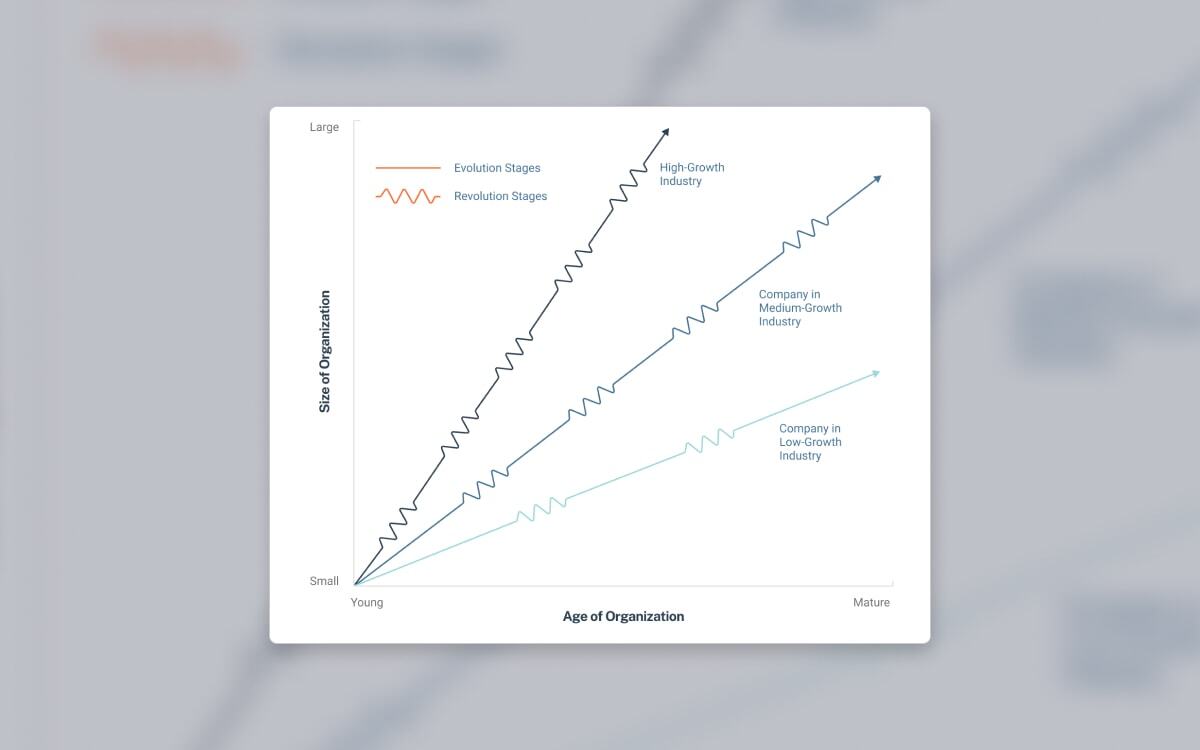 Read the article about Phases of Growth and Crisis in the Life of Nonprofits
Phases of Growth and Crisis in the Life of Nonprofits
Every nonprofit experiences growing pains. Ironically, most of them are caused by the same decisions that made growth possible. This article breaks down the five phases of nonprofit growth, the crisis that ends each one, and how to figure out which phase ...
-
 Read more about Rapid Growth Plan Masterclass
Rapid Growth Plan Masterclass
Transform the dread of nonprofit strategic planning into game-changing impact with our Rapid Growth Plan Masterclass.