Altruistic AI: Transforming Nonprofit Productivity with Artificial Intelligence
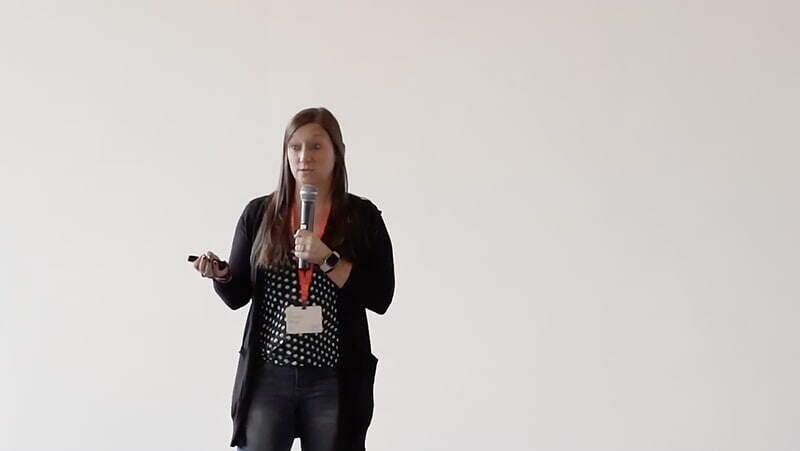
Conference presentation, delivered by Addie Olson, Principal of AI and Data Solutions at Cascadia Solutions
AI can be a powerful tool for nonprofit organizations, but understanding how to use it well requires understanding both its capabilities and its limitations. In this session, we'll look at the fundamentals of artificial intelligence, machine learning, natural language processing, and generative AI, then explore ethical considerations and practical applications for nonprofit teams. The goal is to understand how AI can help us become more productive while remaining responsible users of the technology.
What Is AI?
Let's start with some basic definitions. Artificial intelligence is the capability of a computational system to perform tasks typically associated with human intelligence, such as learning, reasoning, problem-solving, perception, and decision-making. It's a broad category, and inside it is machine learning, which is the engine behind much of the modern AI we use today. Machine learning uses statistical algorithms that learn from the data they're given and then generalize to new or unseen data. Neural networks are one example of a machine learning model and are behind many of the large AI systems we interact with today.
Natural language processing, or NLP, is another field within AI that focuses on computers processing language as data. Large language models are large neural-network machine-learning models built around language, while generative AI refers more broadly to models that have been trained to produce new content based on the data they have learned from. That content can include text, images, video, and other forms of data. Understanding these distinctions helps us move beyond thinking about AI as one single technology and instead recognize that there are many different tools and applications within the broader field.
Breaking Down Generative AI
Machine learning relies on large amounts of data and mathematical models that learn patterns from that data. There are several approaches. In supervised learning, the data is labeled with inputs and outputs, such as emails labeled as spam or not spam, and the model learns to recognize the difference. In unsupervised learning, there are no predefined labels; instead, the model identifies patterns or groups within the data. One nonprofit example might be using characteristics of donors to create segments or clusters of people with similar attributes. Reinforcement learning takes a different approach, with a model dynamically interacting with inputs and updating its behavior based on a reward or objective. A chess program is a useful example: it considers each move and the moves that came before it to determine what action will best accomplish its goal.
Machine learning can perform tasks such as prediction, classification, recommendation, and anomaly detection. The quality of these models depends heavily on the quality and quantity of the data available to them. More representative and higher-quality data can lead to better models. That's one reason the work nonprofits are doing around CRM systems and data tracking is important: good data creates the foundation for better analysis and, potentially, better AI solutions.
Natural language processing has also developed rapidly. It can be used for optical character recognition, speech-to-text, translation, sentiment analysis, topic modeling, summarization, question answering, and generating images or video from text. Advances in word embeddings and transformer models have made it possible for systems to recognize relationships and patterns within language at a much greater scale. Generative AI builds on these capabilities, allowing models to produce new responses based on the patterns they have learned.
One way to think about generative AI is with an octopus analogy. Imagine an octopus sitting on a telegraph wire under the ocean, listening to messages being sent back and forth between two people. It doesn't actually understand the language or the meaning of the messages, but over time it recognizes patterns. If one person stops responding, the octopus might be able to generate a response based on everything it has observed. It's not truly thinking like a human; it's using patterns in the information it has seen to generate something new. That distinction is important when we think about what these systems can and cannot do.
Ethical AI
AI can produce significant benefits, but it can also produce harmful outcomes when systems are built or used without adequate safeguards. One example is the 2019 controversy involving the Apple Card, where a machine-learning algorithm was reported to assign lower credit limits to women regardless of their creditworthiness. Apple said that gender was not directly used in the model, but that does not eliminate the possibility of bias. Other information used by a model—such as someone's name, education, or other characteristics—can act as a proxy for information that isn't explicitly included. If organizations aren't measuring outcomes, they may not even realize that an apparently neutral model is producing inequitable results.
There are other examples of AI causing harm when it is adopted without appropriate guardrails. A chatbot used by the National Eating Disorder Association, for example, reportedly provided harmful dieting advice to people seeking help with eating disorders. Facial-recognition systems have also been shown in multiple studies to have higher error rates for some demographic groups. These examples illustrate why nonprofits need to think about more than whether a technology works technically. We also need to ask what outcomes it produces, who might be harmed, and whether we're actually measuring those outcomes.
Bias can enter AI systems in several ways. There can be data bias, where the information used to train a model reflects historical or systemic inequities. There can be development bias, which comes from the people designing the models and systems. And there can be interaction bias, which comes from how users apply the technology. As AI users, we need to understand that bias is inherent to these systems and actively screen outputs for harmful or inaccurate results, including hallucinations. We also need to take responsibility for how we choose to use the technology.
There is also an environmental cost. Generative AI models require significant amounts of electricity and water for both training and ongoing use. The impact of an individual prompt may seem small, but at the scale of millions of users and large organizations, those resource demands can add up. That means using AI thoughtfully and efficiently is part of responsible adoption as well.
Protect Sensitive Data
Privacy is another critical consideration for nonprofits. Do not supply proprietary, sensitive, or personally identifiable information to generative AI models. That includes donor information such as names and addresses. Strategic, internal, or otherwise non-public information should only be used in systems and settings where the organization's data protections are understood and appropriate. Nonprofits have a particular responsibility here because they often hold sensitive information about donors, clients, volunteers, and the people they serve.
Practical AI
The most useful way to think about AI is to recognize what it is good at and what it is not. AI is currently poor at things like empathy, compassion, judgment, complex problem-solving, adaptability, and innovation. It can also struggle with tasks it wasn't trained for or information outside its context. Many of the things AI is not good at are precisely the things nonprofit professionals bring to their work.
AI is much better suited to tasks involving information and patterns it has been trained to work with. It can be useful for revision, summarization, automating repeatable tasks, generating starting points for brainstorming, and working with specific use cases when it has sufficient context. For nonprofits, potential applications include thank-you notes, newsletters, social media, general outreach, meeting transcription and summaries, brainstorming for events and volunteer engagement, digital strategy, market research, SWOT analysis, simple data analytics, grant-writing assistance, program evaluation, routine data entry, scheduling, surveys, personalized donor marketing, donor segmentation, and website chatbots.
Some applications require more specialized or custom solutions. These might include more intensive data analysis, social-impact reporting, program evaluation, automation of specific organizational workflows, personalized donor marketing, predicting donor gifts, prioritizing prospects, or other solutions that require subject-matter expertise and more specialized data. The important first step isn't necessarily to find the most sophisticated AI application. It's to recognize where your organization is spending time on repetitive, predictable work and ask whether technology can help.
Better Prompts, Better Results
If you want to start using generative AI today, one of the most useful skills is learning how to write effective prompts. There are three basic principles: clarity and conciseness, contextual depth, and a clearly defined intended outcome.
A vague prompt such as "write a post about technology" gives the model almost no direction, so the result will probably be generic. A stronger prompt might ask for a 500-word blog post about the impact of artificial intelligence on modern nonprofits, focusing specifically on social outcomes and revenue growth. You can improve it further by specifying the intended audience, demographic, geographic context, tone, or other information that helps define what you're trying to accomplish. The same principle applies to data analysis. Instead of saying "analyze revenue data," you could specify the years and data source, ask the model to identify monthly revenue trends, and explain that the results will be used for an annual report.
One common mistake is assuming AI knows the context that exists in your head. It doesn't automatically know that you're a nonprofit, what your mission is, who your donors are, or what your organization sounds like. Giving it that context can make the output much more useful. You can also use examples of previous work to demonstrate your organization's tone and style, a technique sometimes called few-shot learning. From there, iterative refinement can improve the result: start with a prompt, review the response, and then ask the model to change, add, remove, or refine specific elements rather than expecting the first response to be perfect.
AI in HubSpot
HubSpot is also incorporating AI into its products. Its AI tools include assisted copywriting, chatbots, summarization, content-writing tools, and Breeze Copilot, which is designed to act as an interactive assistant within the HubSpot platform. Additional AI agents are being developed for areas including content, social media, prospecting, and customer segmentation. These tools can provide another way for nonprofit teams to incorporate AI into existing workflows rather than treating AI as a completely separate system.
The key is to approach these tools with the same principles we've discussed throughout the session. Understand what the technology is doing, provide useful context, review the output, and maintain appropriate human oversight. AI should support the work rather than remove the responsibility for the work.
Finding AI Use Cases
The best place to begin is by looking for tasks and processes that cost your team time but don't require much human judgment. Think about the menial, repetitive, or boring work that someone with relatively minimal training could perform. That might include reading through a large number of survey responses and summarizing the themes, writing personalized thank-you notes, entering information from paper forms or clipboards into spreadsheets, or creating variations of social media content for different platforms and audiences. These are strong candidates for experimentation because automating them can give people more time for work that requires human judgment and relationships.
You can also use AI and organizational data to explore larger strategic questions. For example: How could we measure the value of our content strategy? Which donors might have the greatest capacity for a major ask in the next three months? What's the most impactful way to engage this volunteer? If we spent less time on one activity and more time on another next year, what might we expect to happen to our outcomes? These questions move beyond simple productivity and toward using data and AI to better understand the organization's mission and impact.
The big takeaway is to keep looking for useful applications and to track your data well. Good data creates more opportunities for meaningful analysis, while a clear understanding of your organization's processes helps you identify where AI can actually add value.
Audience Q&A
How do you get started with taking AI to the next level?
A good starting point is your organization's own data and past work. General-purpose tools like ChatGPT aren't built specifically for your nonprofit or your donor communications, so providing examples of content, research, blog posts, or other materials that reflect your mission and voice can help the model produce more relevant results. Iterative prompting is also useful: take one piece of work, make adjustments, ask for improvements, and continue refining it. For organizations with more specific needs, a custom solution may eventually make sense. Transfer learning, for example, can involve taking a general-purpose model and fine-tuning it on data that is particularly relevant to a specific task and desired output.
How much data is needed to fine-tune a model?
In a project at the Federal Reserve, we experimented with different amounts of source material, including 50, 100, and 500 documents. Even the 50-document sample produced surprisingly strong results compared with the control. The amount of data needed depends on the particular application and the parameters of the model, but the experiment demonstrated that useful results don't necessarily require an enormous dataset. At the same time, overfitting is an important consideration: a model can become too specific to the data it was trained on and lose its ability to generalize beyond that context.
Can AI help with grant writing without making the work generic?
AI can be very useful for creating a strong first draft, particularly when you're working through repetitive questions or trying to incorporate information from successful examples. One audience member described using successful grant proposals as source material, providing the relevant organizational information, and having AI draft responses one question at a time. The resulting draft still required substantial review and refinement, but it provided a useful starting point and helped reduce redundancy.
The same principle applies more broadly: AI isn't going to replace the heart, passion, and organizational knowledge that should go into a grant proposal. It can help create the starting point, organize information, and incorporate relevant language, while the human writer remains responsible for the final product. It can also be useful to run the same process through different AI models, such as ChatGPT and Claude, and compare the results to generate additional ideas or perspectives. Breaking a complex task into smaller pieces can also produce better results than asking the AI to handle everything at once.
How can AI support content workflows without making everything sound generic?
The initial creativity, wit, and distinctiveness should come from the human creator rather than relying on AI to generate everything from scratch. Generative AI can then be useful as part of the editing and revision process, particularly when you provide clear context about the intended audience and desired outcome. For example, instead of simply asking AI to revise an Instagram caption, you could explain that you want it to be witty, relevant to a particular audience, and consistent with a specific organizational voice. The important thing is to preserve the creativity and intention at the beginning of the process and then use that context when asking AI to revise or brainstorm.
Closing
AI isn't going anywhere, and nonprofit organizations have an opportunity to use it thoughtfully to improve productivity and make better use of their time and data. Start by looking for repetitive processes that consume staff time, then consider what information and context you can provide to make AI useful. At the same time, responsible adoption requires attention to bias, privacy, environmental impact, accuracy, and human oversight. The goal isn't to replace the people doing the work; it's to use technology to reduce the less meaningful work so nonprofit professionals have more capacity for the judgment, creativity, relationships, and mission-driven work that only people can provide.
This transcript has been lightly edited using AI for clarity and readability, with filler language, technical interruptions, and audience Q&A introductions removed.

 Watch now about From Tech Spaghetti to Scalable Growth: Transforming Nonprofit Marketing with HubSpot
 Watch now about Digital Innovation for Nonprofits: Using HubSpot to Drive Global Impact
 Watch now about Understanding Attribution: Unlock Your Marketing Insights with HubSpot Revenue Attribution
 Watch now about Making Moments Matter: How Nonprofits can Harness the Power of Earned Media
 Watch now about Granting Capacity, Time, and Impact: Building Your Business Case for a CRM Transformation
 Watch now about Paving the Path to Give: Reducing Donation Form Friction with Fundraise Up