A capacity grant is funding set aside specifically for systemic improvements (like a new CRM, strategic planning, or better technology) instead of funding a specific program. Foundations provide much of this funding, but corporate partners, major donors, and even individual donor campaigns can be sources, too.
Most funders will gladly pay for your next program. The technology that lets you scale it? That’s a tougher ask. This session breaks down what a capacity grant is, who's likely to fund one, and how to build a funder pitch that gets results.
Meet the Speaker
-

Matt Scott
Cofounder and CEO, CauseMic
Matt is a leader in nonprofit growth and a social entrepreneur. Prior to cofounding CauseMic, he led development operations at Team Rubicon, a disaster relief organization whose annual revenue scaled from $275K to $51M during his tenure. Matt is a sought-after speaker, sharing his approach to leadership and social impact at conferences like Dreamforce and the Nonprofit Technology Conference. His commitment to using business for good has been recognized with the Civil Service Award, the Arete Service Award, and the Riordan Service Award.
Chapters
Transcript
How to Secure a Capacity Grant to Pay for Your Nonprofit's Digital Transformation
Webinar transcript, presented by Matt Scott, CEO and Cofounder of CauseMic
This session covers the basics of capacity grants (what they are, who funds them, and why), how to position your organization to a funder, and a structured, workshop-style exercise for building your own funder-ready value proposition.
What Is a Capacity Grant?
A capacity grant is funding set aside specifically to help a nonprofit make systemic changes: developing an actionable strategic plan, implementing a new CRM or database, or adopting new technology. This can support both programmatic work and revenue-driving work, including marketing platforms like HubSpot, CRMs like Salesforce, or volunteer management systems. In short, it's funding meant to put best-in-class technology and ways of working in place so an organization can scale its impact and revenue, rather than funding that goes directly to a specific program.
Who typically funds capacity grants:
- Foundations, which often issue capacity grants directly to their grantees
- Corporate partners, such as Cisco, sometimes for their own technology and sometimes more broadly
- The Salesforce Foundation, which sets aside funding specifically to help nonprofits implement Salesforce technology, especially since Salesforce.com acquired Salesforce.org's assets
- Major donors, particularly entrepreneurs and business owners who understand firsthand why technology and marketing infrastructure matter for growth, though other major donors can be strong candidates too
- Individual donor campaigns, such as a crowdfunding campaign built specifically to fund a capacity investment
While foundations typically provide the bulk of capacity grant funding, it's worth considering all of these funder types.
How to Position Your Organization to a Funder
Most funders don't fully understand a structural challenge nonprofits face every day: organizations are expected to solve complex, urgent problems (homelessness, voting access, mental health services, and more) while roughly 80 cents of every dollar raised is expected to go directly to program within that same fiscal year. That leaves little room to invest in the technology and infrastructure needed to actually scale. Donors are generally eager to fund new programs, but rarely want to fund the same program indefinitely; they're looking for the organization to build lasting capacity and financial independence, which requires the right technology and ways of working to get there. Framing a capacity grant request around that gap, helping a donor make a strategic investment in your organization's ability to scale, rather than a one-time program gift, is the core of an effective pitch.
Case Study: Community Resource Center of Teton Valley
This approach works at any budget size. The Community Resource Center of Teton Valley (CRCV) had about $200,000 in annual revenue and a single social worker on staff. Their core service was distributing small cash grants (covering things like a flat tire or an electric bill) to prevent people from reaching a full crisis point. Before the pandemic, they received about five requests a week; when the pandemic hit, that jumped to more than 50 requests a day, all still processed through a paper application, at a time when applicants often couldn't physically deliver one.
A major donor reached out to CauseMic to vet CRCV as a potential recipient for a straightforward cash gift. Instead, CauseMic proposed redirecting that $7,500 into a capacity grant. CauseMic matched the investment and, in a four-day design sprint, implemented Salesforce along with FormAssembly to support both Spanish- and English-language applications, with data flowing automatically into their system and applications triaged not just by need, but by where a given dollar amount would have the greatest impact in preventing a crisis. Moving the process from offline to online, and automating the vetting workflow, let their single social worker scale the number of people she could serve.
That investment quickly created a new problem: more people could now easily apply, which meant CRCV needed more funding to distribute. CauseMic went back to the same donor with a second ask: a $15,000 capacity grant to build a best-in-class fundraising campaign to raise brand awareness, drive website traffic, and grow the funds available to distribute. The result: CRCV grew funding through that campaign by more than 200%, average gift size increased roughly fivefold, and annual revenue grew from $200,000 to $400,000, setting the organization on a sustainable growth track.
By comparison, if the donor had simply given $7,500, and later $15,000, directly as cash distributions, the impact would have been far more limited, and CRCV would have needed to return to that donor repeatedly just to keep pace. Positioning a gift as capacity-building rather than program funding let the donor's investment scale CRCV's impact instead of just extending it.
The donor in this example, referred to as Justin in the original presentation, was a financial advisor and fiduciary, someone legally obligated to act in his clients' best interest, who was already inclined to think in terms of return on investment. That combination (someone who cares about the cause and is comfortable evaluating impact the way they'd evaluate any investment) is often a strong profile for a capacity grant funder. It's also worth noting that many funders, especially foundations, are unlikely to fund a large capacity investment all at once; they want to see proof of impact first. Reporting back clearly on what a first round of funding achieved, and being thoughtful about how that impact story evolves with each successive ask, is essential to securing continued support.
Build Your Own Funder-Ready Value Proposition
The following exercise, originally presented as a live workshop, is designed to help you identify what your organization could achieve with better technology, what's currently standing in the way, and how to combine both into a single statement you could bring to a funder.
- Step 1: List what's possible. Write down at least five single-sentence descriptions of what your organization could achieve with best-in-class technology. Using CRCV as an example: moving a paper application online, identifying grantees by need, or automating the follow-up process.
- Step 2: Identify your top two. Review your list and circle the two outcomes you believe are strongest and most achievable.
- Step 3: List your pain points. Write down every pain point you're currently experiencing with your existing technology. From the CRCV example: manually entering paper application data into spreadsheets, and being unable to quickly compare need across applicants to determine where funding would have the greatest impact.
- Step 4: Identify your top two challenges. From that list, circle the two pain points most directly standing in the way of the outcomes you identified in Step 2.
- Step 5: Combine outcome and challenge into a single statement. Write one sentence that connects what best-in-class technology would let you achieve with the specific hurdle it would help you overcome. CRCV's version: "With best-in-class technology, we can move our paper application online and automate the evaluation process so that we can quickly distribute cash to those who would be most impacted by a grant."
A few examples from webinar participants, with feedback on strengthening them:
- One participant working across donor, volunteer, and grantee data wrote about understanding "an individual's engagement" with their organization to maximize impact and connection, but got stuck on terminology that felt too corporate. The stronger word, and the one that ultimately fit best, was constituent, a term that captures donors, volunteers, and grantee organizations without sounding clinical.
- Another wrote about creating more online training and support for counselors, teachers, chaplains, and first responders. The feedback: strong start, but pair it with a concrete number. A funder responds more to "we could train 200 more counselors" than to "more training," since specific volume makes the potential return on their investment tangible.
- A third example focused on reducing administrative time spent on data entry and application processing by a specific percentage, freeing up staff time to focus directly on service delivery. This version already paired a clear outcome with a quantified impact, which tends to land well with a donor who's already familiar with your work.
The common thread: a value proposition lands best with a funder when it names both a believable, achievable outcome and a real number or volume behind it, not just a general improvement.
A tip for doing this exercise as a group: Rather than having each person circle their own top choices individually, try it with sticky notes. Have everyone post their ideas, then give each person two votes (a dot or a mark) to place on the ideas they find strongest. From there, the group writes a single shared value statement together. This works well for building board or executive team alignment, and some organizations invite major donors to participate directly, which can meaningfully increase their buy-in since they're part of shaping the solution rather than simply hearing about it afterward.
Frequently Asked Questions
What does it mean to pitch a corporate partner on "marketing dollars" instead of philanthropic dollars?
It means positioning your organization as a marketing partner rather than a charity case. Corporate marketing teams are made up of people who need to tell compelling stories to connect with their own customers and employees, and nonprofits often have exactly the stories they need. The approach: identify corporate partners whose brand voice, values, and customer or employee base genuinely overlap with your own volunteers, beneficiaries, or mission (in one example, a nonprofit that deployed military veterans to disaster zones partnered with a workwear brand whose working-class, gritty brand identity closely matched their own). From there, the pitch centers on the overlap between that brand's audience and your organization's community, and on your ability to report back tangible results, like website traffic or audience data, that show the partnership is working. Best-in-class technology matters here specifically because it's what lets you measure and report that impact credibly.
What's a "rapid growth plan," and how does it help secure ongoing capacity grant funding?
A rapid growth plan pairs a one-page strategic plan with a prioritized project backlog, ranked by expected organizational impact. The backlog might include items like implementing Google Analytics 4, switching email service providers, adopting a new CRM, or redesigning a donor welcome series. Presenting a funder with a clear growth strategy, a concrete list of the steps required to execute it, the funding needed, and how you'll measure success, gives them a structured way to keep supporting your organization across multiple funding rounds rather than a single, one-off gift.
Closing
Capacity grants let nonprofits invest in the infrastructure that makes every other kind of growth possible: more revenue, broader reach, and a stronger ability to prove impact to donors and funders. The strongest capacity grant pitches don't ask for money to plug a technology gap; they present a funder with a clear before-and-after story, backed by real numbers, that shows exactly how their investment will scale the organization's impact.
This transcript has been lightly edited using AI for clarity and readability, with filler language, audience banter, and live scheduling logistics removed.
-
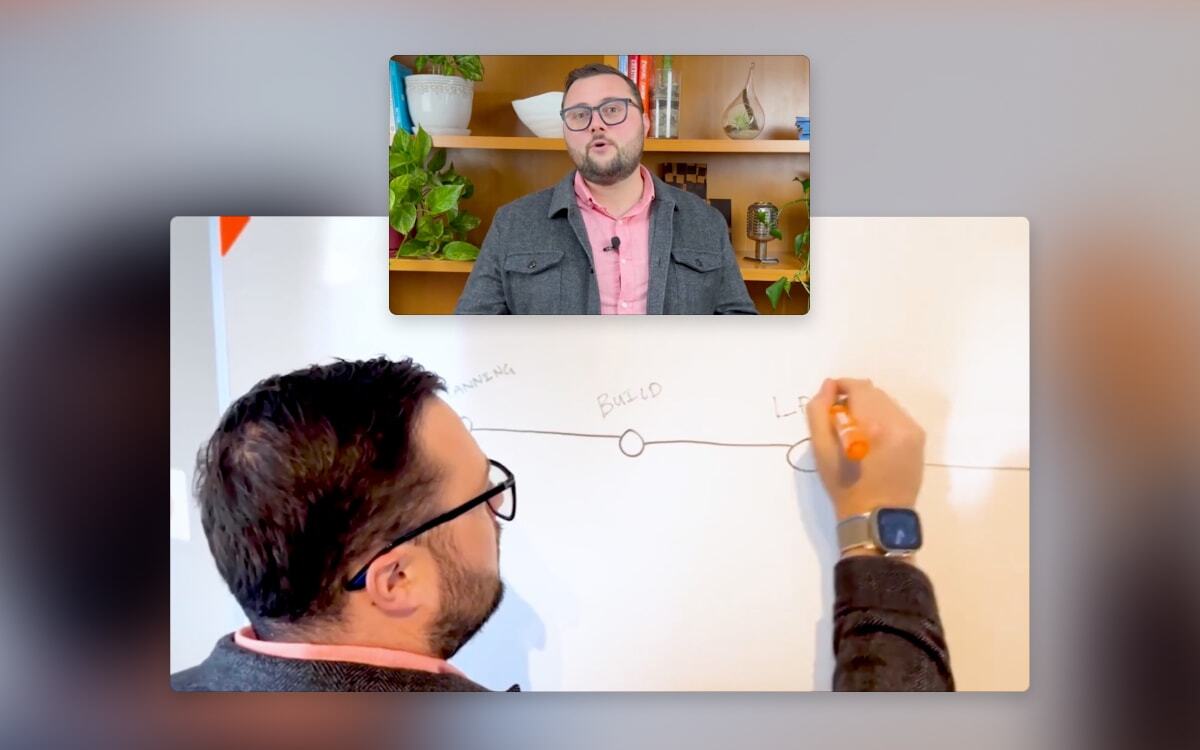 Watch now about How to Run a Retrospective
How to Run a Retrospective
A simple way to improve how your team runs campaigns? The retrospectives. Matt Scott, cofounder and CEO of CauseMic, walks through the six-step process that gives your team the tools they need to figure out what worked, what didn’t, and what to do ...
-
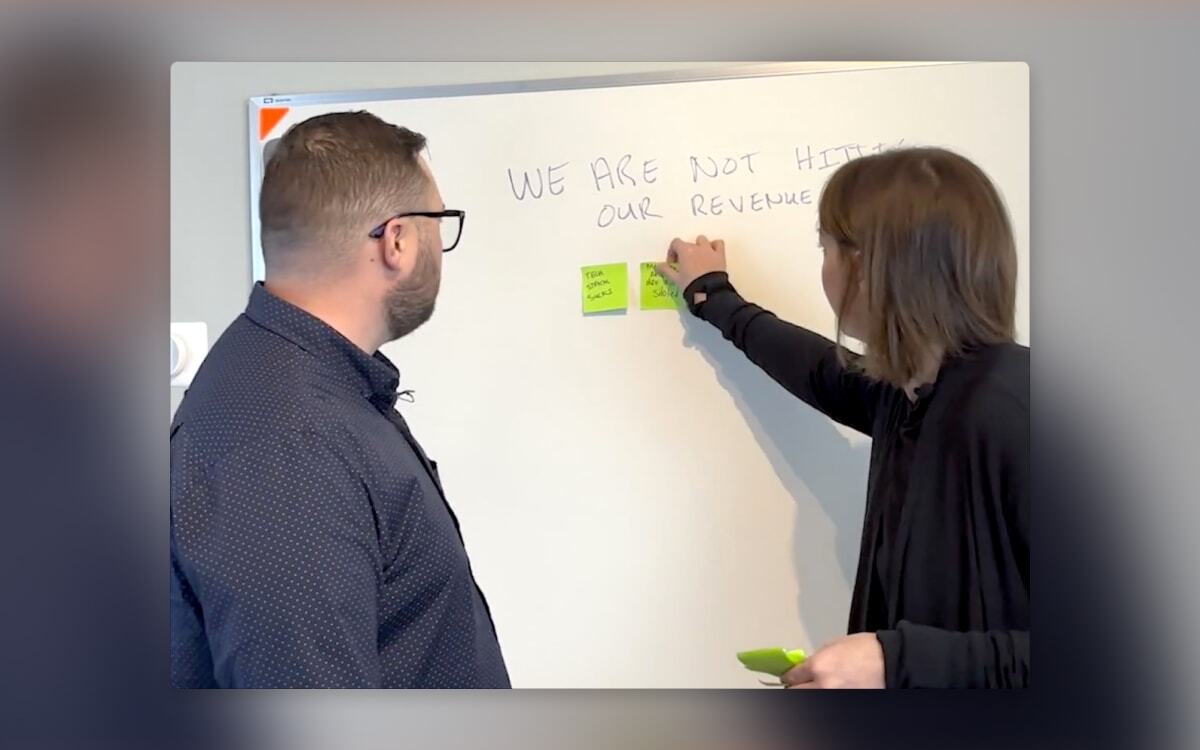 Watch now about How to Use CauseMic’s Problem-Solving Framework
How to Use CauseMic’s Problem-Solving Framework
Trade run-of-the-mill brainstorming meetings for a process that gets you more ideas, clearer decisions, and actionable next steps. Matt Scott and Bobbi Snethen walk through CauseMic’s framework for turning any team problem into a clear, prioritized ...
-
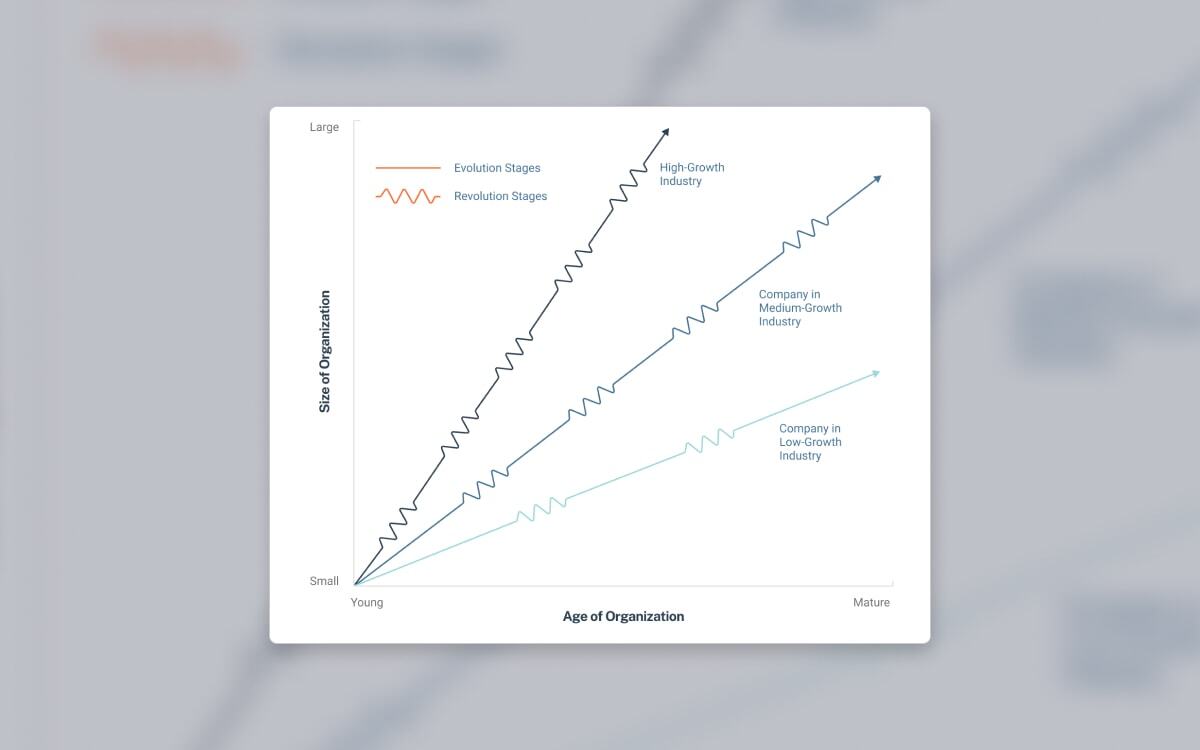 Read the article about Phases of Growth and Crisis in the Life of Nonprofits
Phases of Growth and Crisis in the Life of Nonprofits
Every nonprofit experiences growing pains. Ironically, most of them are caused by the same decisions that made growth possible. This article breaks down the five phases of nonprofit growth, the crisis that ends each one, and how to figure out which phase ...
-
 Watch the webinar about How to Use Corporate Partnerships to Grow Your Nonprofit's Brand Awareness
How to Use Corporate Partnerships to Grow Your Nonprofit's Brand Awareness
Corporate marketing budgets dwarf philanthropic giving, but most nonprofits never tap into them. In this session, you'll learn how to find the right corporate partner, pitch them, and launch a co-branded campaign to get your nonprofit in front of more ...
-
 Watch the webinar about How to Quickly Define an Actionable Nonprofit Strategic Plan for Real Growth
How to Quickly Define an Actionable Nonprofit Strategic Plan for Real Growth
One of our clients spent more than two years creating a strategic plan that no one actually followed. In this session, we'll show you how to build an actionable strategic plan in three weeks, using the same framework that helped grow Team Rubicon's ...
-
 Watch the webinar about 3 For-Profit Methods Nonprofits Can Use to Convert Leads and Upgrade Donors
3 For-Profit Methods Nonprofits Can Use to Convert Leads and Upgrade Donors
What can nonprofits borrow from a for-profit playbook? Three proven ways to boost revenue: a single platform for end-to-end donor engagement, a self-reinforcing "flywheel," and shared data that keeps marketing, fundraising, and programs all on the same ...