
Lead scoring identifies constituents who have two things: genuine interest in your nonprofit and real capacity to give. Not every engaged lead can afford a major gift, and not every high-capacity prospect is actually interested. Looking at both aspects is how a small team can make sure they’re focusing on the most valuable leads and spending their time wisely.
Your marketing team is generating leads faster than your major gift officers can possibly follow up. Sound familiar? Then watch Matt Scott, CEO of CauseMic, as he breaks down lead scoring: a practical way to identify which donors have both real interest and real giving capacity, so your team's limited time goes where it’s most likely to pay off.
You'll learn how to build a simple scoring spreadsheet from scratch, how AI-powered predictive lead scoring can automate and refine that process over time, and which explicit and implicit data points (from job title to email clicks to event attendance) should influence a donor's score.
Meet the Speaker
-

Matt Scott
Cofounder and CEO, CauseMic
Matt is a leader in nonprofit growth and a social entrepreneur. Prior to cofounding CauseMic, he led development operations at Team Rubicon, a disaster relief organization whose annual revenue scaled from $275K to $51M during his tenure. Matt is a sought-after speaker, sharing his approach to leadership and social impact at conferences like Dreamforce and the Nonprofit Technology Conference. His commitment to using business for good has been recognized with the Civil Service Award, the Arete Service Award, and the Riordan Service Award.
Chapters
Transcript
Lead Scoring: How to Identify Which Donors Want More of Your Limited Time
Webinar transcript, presented by Matt Scott, CEO and Cofounder of CauseMic
This session covers what lead scoring is and why it matters, how predictive lead scoring uses AI and machine learning to make the process more efficient, and exactly which explicit and implicit data points to use when building a scoring system of your own.
What Lead Scoring Is, and Why It Matters
Frontline fundraisers generally know that the quality of donor interactions matters more than the quantity. Marketing builds brand awareness and generates a steady stream of leads, but not all of those leads are equally likely to make a major gift, and figuring out which ones are worth a fundraiser's limited time can be a slow, manual process. Lead scoring exists to make that process faster and more effective.
In simple terms, lead scoring identifies which constituents have both the capacity to give and genuine interest in your nonprofit. Both criteria matter; capacity alone or interest alone isn't enough to produce a strong score.
Lead scoring has two components: grading, which measures your organization's interest in a given prospect, and scoring, which measures that prospect's interest in your organization. It's the combination of the two that lets you prioritize your limited time on the most engaged supporters who also have real giving capacity. A volunteer packing care packages for a nonprofit like Operation Gratitude, for example, is demonstrating real interest through behavior, and that behavior can be assigned a score that feeds directly into this process.
How lead scoring actually works, in three steps:
- Determine your lead-to-donor conversion rate. Identify how many new leads (anyone who's shared contact information through a Facebook lead form, an email newsletter signup, a direct mail response, or similar, whether or not they've given yet) your organization acquired over the past 12 months, then identify how many of those leads went on to make a donation. Dividing donors by total leads gives you an overall benchmark conversion rate.
- Identify which behaviors actually correlate with giving. Compare close rates across different behaviors and attributes, for example, does someone who volunteers convert at a higher rate than someone who has simply benefited from your programs? Does proximity to a major gift officer or an in-person event change conversion likelihood? Clustering behaviors this way and comparing their close rates is what reveals which signals genuinely matter.
- Assign weighted values to each data point. Not all information a prospect shares is equally predictive. You might value attending an in-person event more highly than opening an email, or value clicking a link inside an email more highly than simply opening it. Identifying these data points and assigning each a weighted score is what turns raw contact data into a usable priority list, though doing this manually can be time-consuming, which is where supporting technology comes in.
Ultimately, lead scoring helps everyone in an organization understand which contacts deserve relationship-building time based on two factors: genuine interest in the mission, and real capacity to give.
Predictive Lead Scoring
Predictive lead scoring is lead scoring enhanced with machine learning and AI. It identifies patterns across a nonprofit's most recent prospect data and automatically buckets contacts based on that analysis, continuously updating as new data comes in. Not every nonprofit CRM offers this, but HubSpot stands out for being both effective and affordable, offering free CRM access for nonprofits along with a 40% discount on its other products. Other CRMs offer predictive lead scoring too, some with their own nonprofit discounts, so it's worth checking what your current platform supports.
How it works: Predictive lead scoring analyzes both demographic data (location, age, and similar attributes) and behavioral interaction data (website visits, video views, email clicks, event or volunteer activity), then automatically calculates and continuously adjusts a lead score across your entire contact base. Two contact properties matter most:
- Likelihood to close: a percentage representing the probability a contact converts into a donor within the next 90 days. A contact with a value of 22, for example, has roughly a 22% chance of converting within that window. This property updates dynamically as new behavior comes in.
- Contact priority tier: contacts are grouped into four roughly equal tiers (A, B, C, D) based on their probability of closing. Because each tier is evaluated relative to the others, tier thresholds shift over time as the underlying data changes.
Organizations newer to a platform like HubSpot may initially see lower scores in their top tier simply because the system hasn't accumulated enough data yet; as more interactions are logged, the bar for reaching the top tier naturally rises, since major gift officers only have so much time and the system is continuously refining who genuinely belongs at the top.
Predictive lead scoring lets you filter and segment your strongest and weakest leads to direct both marketing effort and major donor outreach toward contacts with the highest combination of engagement and capacity. It can also inform content strategy directly: comparing conversion rates between lower-effort content (like an email) and higher-effort content (like a produced video) can help a marketing team decide where additional production investment is actually justified.
The key difference: lead scoring is the broader, often more manual process of assigning value to leads to prioritize outreach. Predictive lead scoring is the dynamic, AI-driven version of that same process, continuously updated in the background using machine learning across your full contact base.
Which Data Points Matter: Explicit and Implicit Data
Both explicit and implicit data are essential inputs for a lead scoring system.
Explicit Data
Explicit data is information a prospect directly shares through a survey, a lead form, a donation form, or an event registration. This includes demographic data (job title, age) and firmographic data (net worth, annual income, typically sourced through prospect research). Identify roughly 10 demographic and firmographic data points relevant to your organization and assign each a score, with all scores for this category totaling 100.
For example, if your organization has a strong planned giving program, a job title of CEO or business owner might score a 10, compared to a 0 or 5 for an associate-level title. Similarly, a donor aged 65 or older might score a 10, someone 45 to 64 a 5, and someone under 45 a 0, since that age range is statistically less likely to participate in planned giving. These values should be customized to your organization's actual fundraising strategy; an organization focused on building a robust monthly giving program, for example, might weight younger donors more heavily than an organization focused on planned gifts.
Implicit Data
Implicit data is inferred indirectly from a prospect's behavior rather than something they've explicitly stated. Positive behaviors might include viewing a landing page, opening an email, or watching a video, each signaling a different level of genuine interest. Negative behaviors might include unsubscribing from communications or not visiting your website in the last 60 days. As with explicit data, identify roughly 10 positive and negative behavioral data points and assign each a score, again totaling 100.
For example, a landing page view might be worth 10 points, opening an email 5 points, and watching a full video 15 points, reflecting the increasing level of genuine engagement each action represents. On the negative side, unsubscribing might carry a heavier penalty, say negative 25 points, since it's an explicit signal of disinterest, while not visiting the website in 60 days might be a smaller negative 10, since it's a weaker and more ambiguous signal.
This is also where the dynamic element of predictive lead scoring matters most. A behavior like attending an annual event, a gala, or a volunteer activation like a beach cleanup often signals a much higher near-term likelihood to give, since people are typically far more likely to make a gift in the days immediately following a positive, hands-on interaction than they are as more time passes. A gift officer using a real-time, dynamically updated portfolio can see exactly which prospects have just become higher priority based on recent behavior like this.
A Real Example: CauseMic's Own Lead Scoring
CauseMic uses predictive lead scoring internally to identify which prospective clients are most likely to need its services, based on nonprofit size, location, sector, and existing technology stack, combined with behavioral data like newsletter engagement, webinar attendance, or attending CauseMic's in-person Amplify event. This lets the sales team focus limited time on the most qualified, most interested prospects while marketing continues to deliver value more broadly to the full pipeline. The same logic applied during Matt's time fundraising at Team Rubicon: marketing generated a large volume of leads through corporate engagement, paid social, and brand awareness efforts, but the major gift team had a limited number of people and needed lead scoring specifically to focus that limited time on the prospects most likely to convert.
Frequently Asked Questions
This sounds complicated. How do I actually get started?
Start with a simple spreadsheet rather than trying to build a fully automated system right away. Identify roughly 10 behavioral interactions that matter to your organization (opening an email, attending an event, unsubscribing) and assign each a positive or negative value, then do the same for roughly 10 demographic and firmographic data points. Before building anything from scratch, check whether your existing CRM or marketing automation platform already offers lead scoring or predictive lead scoring.
Can you restate the lead-to-donor conversion rate formula?
Look back over the past 12 months and count every new lead, meaning every new contact added to your CRM, not just those who've given, including email subscribers and anyone who's downloaded a resource. Then count how many of those leads went on to make a donation. Dividing the number of donors by the total number of leads gives you your lead-to-donor conversion rate.
What should you do if you're seeing a lot of engagement but not much actual giving?
Start by surveying engaged prospects to understand what they value most about your organization's impact, and use that insight to shape your storytelling. It may also be a capacity issue rather than an interest issue. Look closely at the actual characteristics of donors who have given (company, age, net worth, and how they prefer to give, online or offline, one-time or recurring) and build a lookalike audience from that group to guide targeting. It's also worth noting that broader economic conditions can shift where your focus should be; when mass-market giving lags relative to mid-level and major giving, for example, it may be time to shift outreach focus accordingly.
Is surveying really as simple as just asking someone why they aren't giving?
It can go deeper than that. At the Surfrider Foundation, a CauseMic client running beach cleanups, a paper-based, high-friction registration and volunteer process was limiting the ability to capitalize on a genuinely positive experience. Since volunteers are significantly more likely to make a gift, automating and streamlining that process (from registration through post-event follow-up) created space to survey participants immediately afterward and invite them to take a meaningful next step, like becoming a recurring monthly member, right when their engagement was highest. The deeper work isn't just the survey itself; it's understanding which supporters are likely candidates for a bigger next step and tailoring outreach around the moments and channels that actually move them.
Are volunteers really the most likely group to eventually donate?
Volunteers are generally among the most likely to convert, but they're not the only strong signal. One-time donors are roughly three times more likely to convert to a recurring gift within the first three weeks after their initial donation, and beneficiaries of an organization's own programming also tend to convert at a higher rate. These trends vary by organization, but a positive, hands-on interaction of almost any kind tends to meaningfully increase the likelihood of a future gift.
What's the lowest score that should still warrant a gift officer's direct attention?
This depends heavily on team capacity. A reasonable rule of thumb is about 150 prospects per major gift officer (CauseMic itself tracks roughly 200 comparable "ideal customer" prospects internally). Rather than fixating on an exact score cutoff, set your threshold based on how many prospects your team can realistically manage well, and treat that list as dynamic, shifting as individual prospects' scores change over time.
Should you build campaigns targeting lower-scoring leads, or just let them go?
Don't spend major gift officer time on low-scoring leads; that time returns the highest ROI when focused on your highest-scoring, most engaged, highest-capacity prospects. Lower-scoring leads are a great fit for your marketing team instead, which can focus on increasing engagement and interest over time through broader cultivation, without competing for a gift officer's limited bandwidth.
How do you actually get a nonprofit's CRM set up with HubSpot?
CauseMic offers resources and demos specifically for this, including walkthroughs comparing HubSpot to other CRMs and guidance on migrating from other systems. Reaching out directly is the fastest way to get access to these resources with no sales pressure attached.
How long does it typically take to set up lead scoring?
Assuming your CRM already supports it, the initial setup (defining your roughly 10 behavioral data points and 10 demographic and firmographic data points, and configuring the associated values) generally takes about 10 active hours, spread over roughly a week. If you're using predictive lead scoring specifically, expect it to take about 60 days of accumulated data before the AI-driven scores become genuinely reliable, so plan on a realistic 90-day runway before leaning on that data with full confidence.
Closing
Lead scoring takes a proven for-profit sales practice and applies it directly to nonprofit fundraising: focusing a limited team's time on the contacts most likely to give, based on real interest and real capacity, rather than spreading outreach evenly across every lead marketing generates. It takes some upfront effort to set up, but the time it saves afterward, and the additional revenue it can help unlock, make it well worth the investment.
This transcript has been lightly edited using AI for clarity and readability, with filler language, live poll mechanics, and scheduling chatter removed.
-
 Watch the webinar about How to Inspire Major Gifts with Great Storytelling
How to Inspire Major Gifts with Great Storytelling
Here's your practical guide to nonprofit brand storytelling. You'll learn six steps for building one story you can own, how to make that story stick with donors, and how to adapt it to build even deeper trust with major donors.
-
 Read more about AI-Readiness Self-Assessment
AI-Readiness Self-Assessment
AI can take busywork off your team’s plate, freeing up more time for your mission and supporters. But before you dive in, you need to know how to use it safely and responsibly. This 5-minute self-assessment will help you evaluate your nonprofit’s phase ...
-
 Watch now about How to Run a Retrospective
How to Run a Retrospective
A simple way to improve how your team runs campaigns? The retrospectives. Matt Scott, cofounder and CEO of CauseMic, walks through the six-step process that gives your team the tools they need to figure out what worked, what didn’t, and what to do ...
-
 Watch now about How to Use CauseMic’s Problem-Solving Framework
How to Use CauseMic’s Problem-Solving Framework
Trade run-of-the-mill brainstorming meetings for a process that gets you more ideas, clearer decisions, and actionable next steps. Matt Scott and Bobbi Snethen walk through CauseMic’s framework for turning any team problem into a clear, prioritized ...
-
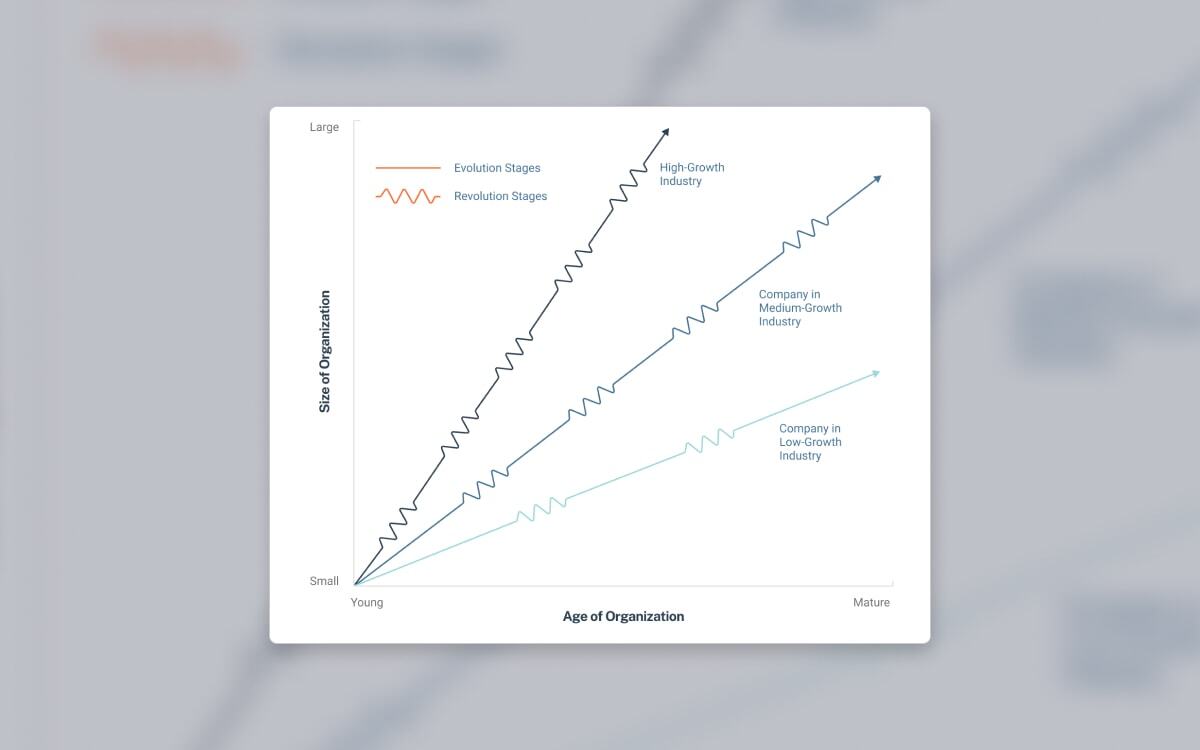 Read the article about Phases of Growth and Crisis in the Life of Nonprofits
Phases of Growth and Crisis in the Life of Nonprofits
Every nonprofit experiences growing pains. Ironically, most of them are caused by the same decisions that made growth possible. This article breaks down the five phases of nonprofit growth, the crisis that ends each one, and how to figure out which phase ...
-
 Read more about Rapid Growth Plan Masterclass
Rapid Growth Plan Masterclass
Transform the dread of nonprofit strategic planning into game-changing impact with our Rapid Growth Plan Masterclass.